Purpose: To assure us that God’s eternal love is the ground of everything good and lasting in the universe.
Scripture: 1 Corinthians 13
Last weeks lesson (1 Corinthians 12) covered spiritual gifts and their roles in the church. In chapter 12, Paul used the metaphor of the church as a body, functioning very much like a human body. Every part of the body must function properly and cooperate with every other part in order to maintain proper health. There has been a lot of press in the last few years on holistic medicine, an approach to healthcare that emphasizes the health of the "whole person". This idea seems to agree with Paul’s metaphor. The health of every part of a person affects the health of all other parts. The same is true in the Church. Every Christian is a unique part of the Body of Christ. Every unique Christian has unique gifts given by the Holy Spirit. Every Christian and every gift has a valuable and important role to play that contributes to the health of the whole Body. Every part needs all the other parts and every part aids all the other parts.
We were told in chapter 12 that all the individuals who make up the have a function in the Church. But what is the function of the Church?
Let’s make a list:
What is the function of the Church? What is the Church for?
Possible answers:
1. The mission of the Church is to make disciples of Jesus Christ
2. To proclaim the Gospel.
3. To seek, welcome, and gather persons into the Body of Christ.
4. To nurture persons in Christian living.
5. To teach persons to live lovingly and justly as servants of Christ by healing the sick, feeding the hungry, caring for the stranger, freeing the oppressed, being and becoming a compassionate, caring presence, and working to develop social structures that are consistent with the gospel.
(Note: these and many other functions of the church can be found on the "What We Believe" page at umc.org)
Of all the answers that we come up with for the function of the church, how many relate to things we do but not to why we do them?
In Chapter 12 Paul tells about who does what in the church. Verse 31 marks a transition:
1Co 12:31 ESV
(31) But earnestly desire the higher gifts. And I will show you a still more excellent way.
Paul is no longer talking about who does what. He now shifts his focus to why.
1Co 13:1-3 ESV
(1) If I speak in the tongues of men and of angels, but have not love, I am a noisy gong or a clanging cymbal.
(2) And if I have prophetic powers, and understand all mysteries and all knowledge, and if I have all faith, so as to remove mountains, but have not love, I am nothing.
(3) If I give away all I have, and if I deliver up my body to be burned, but have not love, I gain nothing.
What point was Paul making about the use of our spiritual gifts in these verses?
Our gifts are only tools and have no value in and of themselves. The only value of our spiritual gifts is how they express love. Paul makes a very radical assertion in these verses. Without love no spiritual gift or any religious act has any lasting significance. Good acts, even sacrificial acts, have no value if they are not motivated by love.
Let’s talk briefly about the love that Paul is talking about. This passage is often used in wedding ceremonies. Does this passage have any relation with romantic love?
The covenantal love that Paul celebrates in this passage has little, if anything, to do with romantic love. This passage is directed at the church as a body and at the individuals that make up that body in how they function together as the church.
Is love just another of the many gifts of the spirit offered to Christians?
Love is not merely a gift. Agape love forms an essential part of our new nature in Christ. Love is the goal of the creator and the basis of all creation. It is the only foundation for eternal life. Love is the foundation on which we build the Body of Christ.
From Adult Bible Studies: Teacher :
One could argue that this text is imminently relevant to marriage. However, the sentimentality of most weddings vitiates the seriousness of Paul’s message, which was directed toward a church that was tearing itself apart.
It would be more faithful to Paul, and more effective for our faith, if we mandated the reading of 1 Corinthians 13 at church council meetings and annual conferences - indeed, at every meeting where Christians meet to settle scores or to keep them....
If we took its message seriously, this chapter would shake the church and its members to the foundations. How much of our activities, architecture, and attitudes would stand the scrutiny of the issue that Paul raised in this chapter? No matter how good it looks or makes us feel, if what we accomplish is not an expression of love, it stands for nothing.....
The founder of Methodism, like Paul, understood that the work of Christ was nothing less than to make us... "perfect in love". It is time to take 1 Corinthians 13 (like the family Bible) out of its case and to start living what we profess.
John Wesley, the founder of Methodism, understood the connection between grace and what he called "sanctification" or "Christian perfection." Early protestants had reacted strongly to the Catholic emphasis on "earning merit" before God and stressed the idea of salvation by grace alone. But salvation was often narrowly defined as "rebirth" or conversion, and the early Reformers had difficulty explaining how Christian conduct was informed by the Bible.
Wesley realized that Christians are not only "justified" or "born again" by faith through grace; Christians are "sanctified" or "perfected" by faith through grace, too. The goal of the Christian life is not merely to "get to heaven" ...but to be made "fit for heaven" by the work of the Spirit. This understanding lies behind the teaching about the Spirit, spiritual gifts, and the doctrine of love in 1 Corinthians 13.
Wesley wrote a tract (one of my favorites) that addressed this subject in depth called A Plain Account of Christian Perfection. Here are some excerpts from this tract:
"Q. 3. How, then, are we 'not without law to God, but under the law to Christ?' (1 Cor. 9:21.)
"A. We are without that law; but it does not follow that we are without any law: For God has established another law in its place, even the law of faith: And we are all under this law to God and to Christ; both our Creator and our Redeemer require us to observe it.
"Q. 4. Is love the fulfilling of this law?
"A. Unquestionably it is. The whole law under which we now are, is fulfilled by love. (Rom. 13:9, 10.) Faith working or animated by love is all that God now requires of man. He has substituted (not sincerity, but) love, in the room of angelic perfection.
"Q. 5. How is 'love the end of the commandment?' (1 Tim. 1:5.)
"A. It is the end of every commandment of God. It is the point aimed at by the whole and every part of the Christian institution. The foundation is faith, purifying the heart; the end love, preserving a good conscience.
"Q. 6. What love is this?
"A. The loving the Lord our God with all our heart, mind, soul, and strength; and the loving our neighbour, every man, as ourselves, as our own souls.
Is the Christian life only about getting to heaven?
How does Paul’s statement that the only value of our spiritual gifts is in how they express love relate to much of what we do in the church today?
What danger is there in doing religious activities or acts of piety out of obligation or habit?
All of our "Christian" acts mean nothing if we have not done them with love in our hearts for God and our neighbors. Service can easily become self-serving without this dimension of love. There is very little danger of not engaging in service if we have love. There is great danger that one can become very active in the church without love.
Can you think of any instances when we have used our spiritual gifts without love?
What should the church do about its positions, roles, and activities that are not motivated by or do not express love?
What love is and is not:
1Co 13:4-7 ESV
(4) Love is patient and kind; love does not envy or boast; it is not arrogant
(5) or rude. It does not insist on its own way; it is not irritable or resentful;
(6) it does not rejoice at wrongdoing, but rejoices with the truth.
(7) Love bears all things, believes all things, hopes all things, endures all things.
Let’s try something different. Let’s read verses 4-7 and every time we find the word "love" replace it with"Christ".
Christ is patient and kind. Christ does not envy or boast. Christ is not arrogant or rude. Christ does not insist on His own way. Christ is not irritable or resentful. Christ does not rejoice at wrongdoing, but rejoices the truth. Christ bears all thing, believes all things, hopes all things, endures all things.
Does that still make a true statement?
Jesus has always set the benchmark for love:
1Jo 3:16 GNB
(16) This is how we know what love is: Christ gave his life for us. We too, then, ought to give our lives for others!
Imitating Jesus and being conformed to Jesus mind and heart is the essence of Christian discipleship.
Is it easy to recognize love in action?
Can we recognize where love is non-existent in our hearts, minds, and actions?
Is it safe to say that where love is non-existent there also Christ is non-existent?
1Co 13:8-12 ESV
(8) Love never ends. As for prophecies, they will pass away; as for tongues, they will cease; as for knowledge, it will pass away.
(9) For we know in part and we prophesy in part,
(10) but when the perfect comes, the partial will pass away.
(11) When I was a child, I spoke like a child, I thought like a child, I reasoned like a child. When I became a man, I gave up childish ways.
(12) For now we see in a mirror dimly, but then face to face. Now I know in part; then I shall know fully, even as I have been fully known.
What is meant by "love never ends"?
Love is not only eternal, but will eternally triumph. All of our spiritual gifts are tools to be used toward that end. The tools will (gifts) will one day become unneeded.
John Wesley’s notes on verse 8:
1Co 13:8 - Love never faileth - It accompanies to, and adorns us in, eternity; it prepares us for, and constitutes, heaven. But whether there be prophecies, they shall fail - When all things are fulfilled, and God is all in all. Whether there be tongues, they shall cease - One language shall prevail among all the inhabitants of heaven, and the low and imperfect languages of earth be forgotten. The knowledge likewise which we now so eagerly pursue, shall then vanish away - As starlight is lost in that of the midday sun, so our present knowledge in the light of eternity.
Is love merely an emotion or feeling?
Popular understanding of love is generally thought to be a romantic emotion, something that makes us feel special about another person. Paul understood love in a much deeper way. He based his understanding of love on the way God has shown His love for us. For Paul love was not merely an emotion. Love is a lifestyle. We love by doing, not by feeling.
What are some of the negative results of inaccurately defining love as a feeling?
Our feeling are in a constant state of change. Interpreting love as a feeling leads us to believe that we can "fall into" or "fall out of" love. Love is not temporary, but eternal.
In verse 3, Paul mentions generosity, or giving. What are some ways that our expressions of giving, even to the point of giving all we have, can be with an unloving attitude?
Many Christians practice charity. Charity is considered one of the defining marks of a Christian.
From William Barclay’s New Daily Study Bible:
There is nothing more humiliating that this so-called charity without love. To give as a grim duty, to give with a certain contempt, to take the moral high ground and throw scraps of charity as to a dog, to give and to accompany the giving with a smug moral lecture or a crushing rebuke, is not charity at all - it is pride; and pride is always cruel, for it knows no love.
How can we develop a mind-set that sees the worth of people and anticipates their becoming more than they currently are?
The best answer that I can come up with to that one is to practice love with open hearts, open minds, and open doors.
1Co 13:13 ESV
(13) So now faith, hope, and love abide, these three; but the greatest of these is love.
John Wesley’s notes on verse 13:
1Co 13:13 - Faith, hope, love - Are the sum of perfection on earth; love alone is the sum of perfection in heaven.
Saturday, July 29, 2006


Sunday, July 23, 2006
Blame it on HGTV
Due to the filming of the latest episode of "Trick My Kitchen" on location in the East wing of my home, there will be no Sunday School Lesson this week.
Stay tuned for next weeks episode : "Perserverance Through the Trials of Remodeling" or "My Back Porch is Now My Kitchen."
Stay tuned for next weeks episode : "Perserverance Through the Trials of Remodeling" or "My Back Porch is Now My Kitchen."
Sunday, July 02, 2006
Underdogs
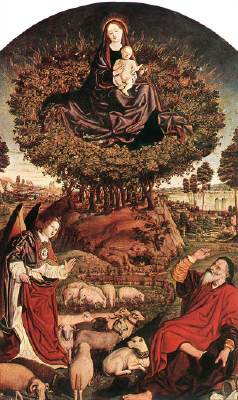
230 years ago a group of delegates from the thirteen colonies met in Philadelphia and signed a document that marked the beginning of democracy in the world. These brave men and many others like them took a stand and delivered America from rule without representation.
To call the continental army and the new government of the United States of America an underdog would be an understatement. A ragtag, poorly armed, group of frontiersmen took up their squirrel rifles and fowling guns and stood against the most powerful military of the time. We all love stories of underdogs who rise up to a challenge and beat the odds and prevail despite the overwhelming odds. This week we celebrate the deliverance begun by those first patriots.
A much more unlikely deliverer in the pages of history is Moses. His reluctance to assume a leadership role in delivering his people from bondage is quite clear. After all he was just a shepherd, not a diplomat or army general. We don’t often think of great leaders as being especially humble. But perhaps Moses great humility is what led God to choose him for leadership.
Exo 3:1-12 MSG
(1) Moses was shepherding the flock of Jethro, his father-in-law, the priest of Midian. He led the flock to the west end of the wilderness and came to the mountain of God, Horeb.
(2) The angel of GOD appeared to him in flames of fire blazing out of the middle of a bush. He looked. The bush was blazing away but it didn't burn up.
(3) Moses said, "What's going on here? I can't believe this! Amazing! Why doesn't the bush burn up?"
(4) GOD saw that he had stopped to look. God called to him from out of the bush, "Moses! Moses!" He said, "Yes? I'm right here!"
(5) God said, "Don't come any closer. Remove your sandals from your feet. You're standing on holy ground."
(6) Then he said, "I am the God of your father: The God of Abraham, the God of Isaac, the God of Jacob." Moses hid his face, afraid to look at God.
(7) GOD said, "I've taken a good, long look at the affliction of my people in Egypt. I've heard their cries for deliverance from their slave masters; I know all about their pain.
(8) And now I have come down to help them, pry them loose from the grip of Egypt, get them out of that country and bring them to a good land with wide-open spaces, a land lush with milk and honey, the land of the Canaanite, the Hittite, the Amorite, the Perizzite, the Hivite, and the Jebusite.
(9) "The Israelite cry for help has come to me, and I've seen for myself how cruelly they're being treated by the Egyptians.
(10) It's time for you to go back: I'm sending you to Pharaoh to bring my people, the People of Israel, out of Egypt."
(11) Moses answered God, "But why me? What makes you think that I could ever go to Pharaoh and lead the children of Israel out of Egypt?"
(12) "I'll be with you," God said....
If we were to begin to think of some things in our world that require a "deliverer" or are in need of deliverance we would likely end up with a substantial list. You may think of something personal, a situation involving the church, our community, the nation, or the world.
Our world is in dire need of deliverance from terrorism, world hunger, cancer and heart disease, AIDS, devastating natural disasters. The list could go on and on.
Our world cries out for a deliverer. We may find ourselves or others around us crying out for a deliverer.
Who might God use to bring about the change?
Could it be you, or me? Could it some or all of us working as a team, much like those who served on the Second Continental Congress of 1776?
Most of us lead a fairly routine life. We all have routines, from the way we brush our teeth, to the route we drive to town or work, to the food we normally eat.
Our routines are important to us. They bring a sense of normalcy, they give us a feeling of balance and rhythm in a chaotic world. Routines can have great value. Our routines can keep us focused and on track, but if we become obsessive about them or locked into following them they can become harmful. They may make us so comfortable that we question God’s will for us. Just like Moses: "But why me? What makes you think that I can do anything great?"
What does it take to change a routine?
Moving to a new town, going on vacation, celebrating holidays, death or illness of a loved one, a deliberate choice to make a change, are some examples. We don’t all see God in a burning bush, but it doesn’t always take such drastic means to change our routines.
When our routines do change we can end up living different lives if the changes are drastic enough. Sometimes God will enter into our normal routines and when He does we may not be thrilled with the results. God may confirm or strengthen what we are already doing, or God may upset everything and change the direction of our life.
What does it take to get our attention? We spend the greater part of our lives not noticing most things around us. For instance very few of us could describe in detail everything we saw on the way to church this morning. Yes, we can list a number of things, but how many trees did we see? Which lawns were mowed? How many cracks are in the sidewalk outside? From sights to sounds to smells we roll them into life’s "background" unless something significant attracts our attention.
How many bushes did Moses walk by or see in his peripheral vision before he saw the one that was ablaze? It was in the middle of a very ordinary day that Moses encountered something that changed his life forever. The blazing bush captured his attention.
I ask, What gets your attention?
How does God capture your attention? Have you ever had any "burning bush" experiences? What kind of experience does it take to make you decid that it is critically important to "turn aside and look"?
Has God ever interrupted you when you were minding your own business?
Was there anything special about Moses’ bush? Or was it just an ordinary bush?
One writer said about this bush, "any old bush will do. A scraggly bush will do. A tall stately bush will do. A sick and dying bush would do."
What is true for the bush is also true for us. God can use ordinary bread and butter Christians like us.
Many times we are so stuck in our routines that we don’t allow God to capture our attention.
We are not always eager to hear that God wants our cooperation. It would be much easier just to sit back and let God take care of everything. We would be happy to sit on the sidelines and cheer God on, of course, but we would rather not be in the middle of the struggle. Yet here is another way in which God honors us, in that we do have actual freedom and responsibility. God works with us, but at the same time depends on us to do the things that we are capable of doing. God even expects us to learn from our mistakes.
God doesn’t need our help, but God wants our help.
God will do the "God parts" to deliver us. God does not do our parts for us.
Few people are called by God to be Moses figures. Most of us live on a smaller, less grand scale. This in no way means that we are not also called to play our part in deliverances, whether large or small. Mentoring a child through a church or other organization or driving one day each week for Meals on Wheels or working on a Habitat for Humanity home or working a potato drop for the Society of St. Andrew takes more effort than writing a check to those organizations, just as going to Egypt was harder for Moses than continuing to tend sheep in Midian. Many kinds of deliverance need human participation. The Meals on Wheels program, for instance, delivers much more that nourishing food, for many of the clients it also delivers them from loneliness and lack of companionship.
We may be more comfortable seeing ourselves primarily in the "Moses" position, as cooperating with God to help someone else’s plight. Can we also see ourselves in the "Israelite" position, being in deep trouble from which we can see no immediate way out?
Although we have probably not been oppressed as the Hebrews were, we all face situations that prompt us to cry out to God to save, rescue, liberate, or deliver us. The Bible promises us that God will be with us.
Yes Moses heard and followed God’s call. But note carefully what went before: the enslaved Israelites called out to God from their bondage. They had not given up all hope; they were willing to cry out to the Lord. What stops us from admitting our fears and needs to God?
Deliverance has two sides and we may be surprised to discover that as we do what seems our puny effort for a large cause, God is simultaneously delivering us from our own private bondages. How often do you hear people returning from mission trips proclaiming that they received so much more than they gave?
We all in some ways try to avoid God’s call. We are happy in our routines. Even some of the delegates at the Second Continental Congress in 1776 were indecisive. The Declaration of Independence went through many revisions before finding enough support. Even in it’s final form, the delegates of only 9 colonies signed it. Many colonists remained loyal to the king, even when the abuses were obvious.
We sometimes agree to change our routine only after much haggling.
When God is present, holiness abounds. Even though we may never see a burning bush we are even now standing on holy ground. We must always take our shoes off and show the proper respect due to God as we "stand on holy ground".
From the strut of the football player who just scored a touchdown to the sneer of the CEO defending unjust business practices, pride and arrogance are evident all around us. In the midst of such a culture, even Christians are sometimes tempted to "strut their stuff" as well. Bragging about church attendance, huge offerings, and square footage of buildings can deny God as being the giver of all of these things.
A few years ago a lady remarked with excitement in her eyes about the presence of a certain basketball star in her church’s worship services. An onlooker listened to her go on and on about the celebrity in their midst and quipped, "Well, you know God was there, too." Take time to stop and remember that after all is said and done, it is all about God.
Hulda Crooks began climbing mountains at the age of fifty-three. She climbed 11,500 ft. Mt. San Gorgonio in Southern Cal. twenty times. At age sixty six she made the first of twenty ascents of California’s 14,500 ft. Mt. Whitney, the highest peak in the lower 48 states. Her last ascent was at age ninety one. She is also the oldest person to climb Mt. Fuji, the highest mountain in Japan.
Hulda started jogging when she was seventy two saying, "it made climbing so much easier." She also back-packed the two hundred twelve mile John Muir Trail in the Sierra Nevada, set a senior olympics world record in her age group for 1500 meters, and hiked to the bottom of the Grand Canyon.
Before she died in 1997 at the age of one hundred one, Hulda, a Christian , expressed the guiding principle of her life: "When you have faith in a supreme power that you believe is alive and full of kindness and has a care for you, you’re not under tensions like other people. You develop a habit of trusting."
Trusting: so easy to say, so hard to do. At first Moses had trouble trusting God. He had questions about his ability to do what God asked. In the end, it was Moses’ trust in God’s promise, "I will be with you", that made the difference. When trust in God took hold of Moses’ life, he began to accomplish things he never would have imagined doing before. Do you suppose the same could be true for the rest of us?
Could one of us be the next underdog destined for great things in Christ?
Saturday, June 24, 2006
Sunday School Lesson: Serving Responsibly
Purpose: To explore what it means to serve responsibly in the community of faith.
Scripture: 1 Corinthians 4:1-13
Who are the ministers of the church?
One very "Methodist/Wesleyan" tradition is that of "The Priesthood of All Believers" or "The Ministry of All Christians". We all, as professing Christians, upon taking our Baptismal Vows are called into the ministry of the church. The ministry of the church is the responsibility of us all. The paid clergymen that we commonly call "ministers" are only a very small percentage of the ministry.
UMC Book of Discipline, Paragraph 220-
The Call to Ministry of All the Baptized - All members of Christ’s universal church are called to share in the ministry which is committed to the whole church of Jesus Christ.
Who are the ministers of the church? We all are.
What is the function of the ministers of the church?
Ministers are servants.
Continuing Paragraph 220 -
Therefore, each member of The United Methodist Church is to be a servant of Christ on mission....
Repeat after me: "I am a servant!" How does that make you feel? Do you like being a servant?
Are you treated like a servant? Is that how you want to be treated?
Think about this: Do others see you as a servant?
What is the limit to our servanthood in Christ? Can we serve too much? Is there ever a time that we should back off and let someone else serve for a while? Is there ever a time that we should be served?
Where is our mission?
Many Christians believe that "mission" means traveling to some underdeveloped nation or area of natural disaster and "winning souls for Christ." While that is a very laudable deed, that is not the mission of all believers. Our mission is wherever we happen to be at any particular place and time. Our mission is not a weekend excursion or something that we start and stop at different times and places. Our mission is not a "trip". Our mission is a never-ending journey. Our mission never leaves us, although we very often leave our mission.
Continuing Paragraph 220 -
This servanthood is performed in family life, daily work, recreation and social activities, responsible citizenship, the stewardship of property and accumulated resources, the issues of corporate life, and all attitudes toward other persons.....
Each member is called upon to be a witness for Christ in the world, a light and leaven in society, and a reconciler in a culture of conflict.
Some folks find their mission in the jungles of Peru or Indonesia. My mission is on the construction sites and industrial plants of Georgia, Florida, and Alabama. Where is yours?
I would be willing to bet that there are as many folks in need of ministry on my mission field and yours as there are on the foreign mission fields.
How do we demonstrate our servanthood?
When we unite as professing members of a local United Methodist Church we enter into a covenant with God and with the other members of the church to keep the vows which are a part of the order of confirmation and reception into the church.
Can anyone tell what some of those vows are?
There are seven of them:
1. Do you renounce the spiritual forces of wickedness, reject the evil powers of this world, and repent of your sin?
2. Do you accept the freedom and power God gives you to resist evil, injustice, and oppression in whatever forms they present themselves?
3. Do you confess Jesus Christ as your Savior, put your whole trust in his grace, and promise to serve him as your Lord?
4. Will you remain faithful members of Christ’s holy Church and serve as Christ’s representatives in the world?
5. Will you be loyal to The United Methodist Church, and do all in your power to strengthen its ministries?
6. Will you faithfully participate in its ministries by your prayers, your presence, your gifts, and your service?
7. We join together in professing the Christian faith as contained in the Scriptures of the Old and New Testaments.
That’s how we United Methodists demonstrate our ministry of servanthood.
1Co 4:1-6 ESV
(1) This is how one should regard us, as servants of Christ and stewards of the mysteries of God.
(2) Moreover, it is required of stewards that they be found trustworthy.
(3) But with me it is a very small thing that I should be judged by you or by any human court. In fact, I do not even judge myself.
(4) I am not aware of anything against myself, but I am not thereby acquitted. It is the Lord who judges me.
(5) Therefore do not pronounce judgment before the time, before the Lord comes, who will bring to light the things now hidden in darkness and will disclose the purposes of the heart. Then each one will receive his commendation from God.
(6) I have applied all these things to myself and Apollos for your benefit, brothers, that you may learn by us not to go beyond what is written, that none of you may be puffed up in favor of one against another.
What are the two identifiers of a Christian in verse one?
Servants and stewards. The word servant as used here is the reason I started this whole discussion on "ministers". If you read this verse in the King James Version and others the word used is "minister". This is not the way we always think of "ministers" in modern times. How often when you use the word "minister" would you feel it proper to substitute the word "servant"?
Let’s take it back to the Greek and see where we get the words minister and servant from. The Greek word translated here as minister or servant is "huperetes" (hoop-ay-ret-ace) and literally translates as "under oarsman". This word described the slaves who rowed the huge Roman trading ships. Paul, a minister, or servant, of Christ, loudly declares to the Corinthian church, "We are not the captain of this ship. We are merely slaves, obeying our orders, and by our united strength, are moving the ship forward as our True Captain wishes."
The other word Paul uses to describe the Christian ministry is "steward", another type of servant.
How would you define "steward"?
We modern Christians make too much of the relationship between stewardship and handling of money. We have stewardship committees and campaigns in the church whose sole purpose is to encourage folks to give more money. A good steward manages much more than finances.
A steward is a servant who manages everything for his master, but who himself owns nothing. Joseph was a steward in the house of Potiphar. The steward in the typical Greco-Roman household was responsible for the welfare of the entire household and that was their only responsibility. Stewards reported directly to the master of the house and to noone else. The steward had absolutely no interest in pleasing any other member of the household or the staff other than his master. If the master is pleased then he is a good steward. If the master is not pleased then he is not a good steward.
What is it that Paul says we are to be stewards of?
We are to be stewards of the "mysteries of God"; the Gospel. We are to manage the Faith and see to it’s welfare and cause it to flourish.
What should be our main goal as stewards of the Faith?
Our goal should never be to be, do, or say the right things according to popular opinion, but to be, do, and say the right things according to the work that God has assigned us. If a servant of God is faithful in his personal life, in his home, and in his ministry, then he is a good steward and will be rewarded by a pleased Master. The position of steward is an important position, but one that exists only for the sake of serving the masters wishes.
Paul mentions three types of judgement for the servants of Christ. What are they and how do they rank in importance?
But with me it is a very small thing that I should be judged by you or by any human court.
1. Man’s judgement. The opinion of our peers. Did Paul get upset when people criticized him, his message, or his methods? Not at all. The opinions of others meant very little to Paul. Paul, and we, as stewards answer to only one Master. The Corinthians were evaluating the ministries of Paul, Apollos, and Peter based on cultural criteria. The Corinthians basis for judgement was on the effectiveness or charisma of the preachers. As a steward, Paul told the Corinthians that he cared not at all about their expectations and criticism.
In fact, I do not even judge myself. I am not aware of anything against myself, but I am not thereby acquitted.
2. The servant’s own self-criticism. Paul was pretty certain that he was being a faithful servant, but acknowledged that if there was any fault he would be judged accordingly. We must constantly and diligently search our consciences. The Holy Spirit bears witness with our spirits and a clear conscience is a good sign of faithful service, but we must beware: there is a fine line between a clear conscience and a self-righteous attitude.
It is the Lord who judges me.
3. The most important judgement of all is God’s judgement. To serve responsibly in the community of faith is to be concerned with the judgement of God, not the judgement of humans. What counts for the steward is that the Master finds him faithful and reliable in carrying out his duty. The faithful steward is not swayed by the opinions of the other servants.
How much of our ministries today are the direct result of opinion polls, surveys, or market research?
Churches these days are resorting to all types of gimmicks and different styles of worship just to attract people. Churches try different styles of music to attract younger visitors. Churches try to make their Vacation Bible School as "cute" as possible so that parents will bring their kids. They've got video games, DVDs, Happy Meal-esque prizes and connections to major movies.
"Times have changed, and we have to keep up with our kids and we have to go along with some of the things they like," said one mother who will send her two sons, 7 and 14, to vacation Bible school this year. "If not, we're going to lose them."
One church in Sioux City, Iowa gives first time visitors vouchers good for free gasoline. Says their pastor:
"We are so confident that our worship service will be the best hour of your week, that we are willing to pay for your gas to get here and back. ..."
Churches are now high tech. They have all the latest electronic gadgets. Hymnals are being replaced by overhead projectors. Our sound systems rival those of great concert halls. We have web-sites and chat forums. Some churches now have several physical locations served by one Head Pastor whose sermons are broadcast to the remote locations in such a high tech fashion that it almost seems live.
These examples are all pandering to whose judgement?
These all are seeking the approval of our fellow workers.
Should we totally disregard the polls, surveys, and research? Should we pronounce judgement on the high tech market driven church simply because their methods are new and unproven on a long-term basis?
The final judgement is not ours and will not be on our time table.
In verses 5 and 6 what are three things that we are doing wrong when we judge God’s servants?
Therefore do not pronounce judgment before the time
1. We are judging at the wrong time. The time for judgement is when Jesus returns. We cannot see into the hearts of others. We cannot even begin to judge the motives of others. Only God can do that. The Corinthians were "playing God." We should always guard ourselves against assuming for ourselves the privileges that only God has. Suppose we misjudge one that God judges as a faithful steward?
not to go beyond what is written
2. We are judging by the wrong standards. The Corinthians were judging Paul and Apollos according to their own personal preferences and prejudices. They were even comparing ministers to one another! Imagine that! That could never happen in this day and age. Could it? There is only one basis for evaluation: "that which is written", the Word of God. The Word clearly reveals the kind of life and service that is required of all of us. What are we doing when we add to or take away from the standards as written?
that none of you may be puffed up in favor of one against another
3. We are judging with the wrong motives. The Corinthians were tearing down preachers in order to make their favorites look better. Their motive had nothing to do with legitimate complaints. They promoted division in the church by playing "favorites". Their judgment was based solely on personal pride, not based on the standards of Christian stewardship. There is one key test to faithful stewardship: Have they been faithful to obey and teach the Word of God? Not just what they preach, but also what they practice.
1Co 4:7-13 ESV
(7) For who sees anything different in you? What do you have that you did not receive? If then you received it, why do you boast as if you did not receive it?
(8) Already you have all you want! Already you have become rich! Without us you have become kings! And would that you did reign, so that we might share the rule with you!
(9) For I think that God has exhibited us apostles as last of all, like men sentenced to death, because we have become a spectacle to the world, to angels, and to men.
(10) We are fools for Christ's sake, but you are wise in Christ. We are weak, but you are strong. You are held in honor, but we in disrepute.
(11) To the present hour we hunger and thirst, we are poorly dressed and buffeted and homeless,
(12) and we labor, working with our own hands. When reviled, we bless; when persecuted, we endure;
(13) when slandered, we entreat. We have become, and are still, like the scum of the world, the refuse of all things.
1 Corinthians 3 detailed the differences between mature and immature Christians. This is another passage that is directed straight at the immature Christians in the Corinthian church. Immature Christians often seek a theology of glory and personal blessing. Mature Christians know that trials and tribulations go hand in hand with faithful servanthood. Some Christians are reluctant to accept humility and powerlessness for the sake of the Gospel. But that is what we are called to do. Jesus told those who wanted to follow him that they must "deny themselves and take up their cross daily" (Luke 9:23).
This is what tradition tells us happened to the eleven original apostles: Andrew, Peter, and Simon were crucified (Peter upside-down); Bartholomew was flayed alive; James the son of Zebedee was beheaded; James the son of Alphaeus was beaten to death; Thomas was killed by a spear; Mathias was stoned; Matthew died by a sword; Thaddeus was shot dead by arrows; and Philip was hanged. Only John is believed to have died a natural death. How’s that for a prosperity gospel?
Fools for Christ is what Paul called Christians. By worldly standards one would have to be a fool to accept that kind of fate.
Paul was using language that anyone living in the Roman Empire would have understood quite well. Paul said that the apostles were "exhibited last of all, as though sentenced to death" and have become a "spectacle". This is another passage where the original language can help us get a better picture of what Paul was portraying to the Corinthians. The Roman government used entertainment as one means of keeping the people pacified. (If I were a conspiracy theorist, I may be convinced that the same thing happens today.) There were theaters and coliseums in most of the major cities. The Greek word "theatron", translated here as "spectacle" is where we get the word "theater". The theaters of the day would be filled with spectators eager to see the bizarre games and to see prisoners and slaves forced to fight with each other and with wild animals. When the main events were over, the very poorest and weakest of the prisoners were brought out to fight the strongest of the animals. Those who were "exhibited last of all" were almost certainly receiving a "sentence of death." Nobody ever expected the "last of all" to survive their performance. Very likely some of those deaths of the apostles had already occurred when Paul wrote this and were known about by him. Paul used this picture of the apparent "foolishness" of becoming a disciple of Christ to contrast with the Corinthians watering down of the gospel.
Paul used some severe sarcasm in this passage. He described the Corinthian Christians as kings. He seems to be saying, "I wish I could be royalty like you and take my royal place in a box seat at the theater. But instead, I am the spectacle, one of those exhibited last of all. I take my place in the arena and suffer for my Master. There is no place for pride in the ministry which we have all vowed to be a part of."
If Paul considered himself an exhibition at the end of the show, where does that leave us?
Paul was a fool according to the standards of men, but was a wise and faithful steward for his Master. The Corinthians were wise in their own eyes, but were fools when judged by their service and stewardship.
What does it mean to be a fool for Christ?
The Corinthians thought they had it all together. They couldn’t really understand someone like Paul who had given up a prosperous life as a Pharisee to live as a poor, beaten, traveling preacher for Jesus. Faithfulness in service and a humble nature are two very important characteristics of a minister of Jesus Christ. A minister must be willing to work and he must be willing to suffer. Work and suffering are two things that the world strives to rid itself of. That’s what makes a Christian look foolish by the world’s standards. We are not afraid to get our hands dirty if that what is required and we don’t back off every time we stump our toe.
Let every man consider us as servants of Christ and as stewards of the Faith.
Scripture: 1 Corinthians 4:1-13
Who are the ministers of the church?
One very "Methodist/Wesleyan" tradition is that of "The Priesthood of All Believers" or "The Ministry of All Christians". We all, as professing Christians, upon taking our Baptismal Vows are called into the ministry of the church. The ministry of the church is the responsibility of us all. The paid clergymen that we commonly call "ministers" are only a very small percentage of the ministry.
UMC Book of Discipline, Paragraph 220-
The Call to Ministry of All the Baptized - All members of Christ’s universal church are called to share in the ministry which is committed to the whole church of Jesus Christ.
Who are the ministers of the church? We all are.
What is the function of the ministers of the church?
Ministers are servants.
Continuing Paragraph 220 -
Therefore, each member of The United Methodist Church is to be a servant of Christ on mission....
Repeat after me: "I am a servant!" How does that make you feel? Do you like being a servant?
Are you treated like a servant? Is that how you want to be treated?
Think about this: Do others see you as a servant?
What is the limit to our servanthood in Christ? Can we serve too much? Is there ever a time that we should back off and let someone else serve for a while? Is there ever a time that we should be served?
Where is our mission?
Many Christians believe that "mission" means traveling to some underdeveloped nation or area of natural disaster and "winning souls for Christ." While that is a very laudable deed, that is not the mission of all believers. Our mission is wherever we happen to be at any particular place and time. Our mission is not a weekend excursion or something that we start and stop at different times and places. Our mission is not a "trip". Our mission is a never-ending journey. Our mission never leaves us, although we very often leave our mission.
Continuing Paragraph 220 -
This servanthood is performed in family life, daily work, recreation and social activities, responsible citizenship, the stewardship of property and accumulated resources, the issues of corporate life, and all attitudes toward other persons.....
Each member is called upon to be a witness for Christ in the world, a light and leaven in society, and a reconciler in a culture of conflict.
Some folks find their mission in the jungles of Peru or Indonesia. My mission is on the construction sites and industrial plants of Georgia, Florida, and Alabama. Where is yours?
I would be willing to bet that there are as many folks in need of ministry on my mission field and yours as there are on the foreign mission fields.
How do we demonstrate our servanthood?
When we unite as professing members of a local United Methodist Church we enter into a covenant with God and with the other members of the church to keep the vows which are a part of the order of confirmation and reception into the church.
Can anyone tell what some of those vows are?
There are seven of them:
1. Do you renounce the spiritual forces of wickedness, reject the evil powers of this world, and repent of your sin?
2. Do you accept the freedom and power God gives you to resist evil, injustice, and oppression in whatever forms they present themselves?
3. Do you confess Jesus Christ as your Savior, put your whole trust in his grace, and promise to serve him as your Lord?
4. Will you remain faithful members of Christ’s holy Church and serve as Christ’s representatives in the world?
5. Will you be loyal to The United Methodist Church, and do all in your power to strengthen its ministries?
6. Will you faithfully participate in its ministries by your prayers, your presence, your gifts, and your service?
7. We join together in professing the Christian faith as contained in the Scriptures of the Old and New Testaments.
That’s how we United Methodists demonstrate our ministry of servanthood.
1Co 4:1-6 ESV
(1) This is how one should regard us, as servants of Christ and stewards of the mysteries of God.
(2) Moreover, it is required of stewards that they be found trustworthy.
(3) But with me it is a very small thing that I should be judged by you or by any human court. In fact, I do not even judge myself.
(4) I am not aware of anything against myself, but I am not thereby acquitted. It is the Lord who judges me.
(5) Therefore do not pronounce judgment before the time, before the Lord comes, who will bring to light the things now hidden in darkness and will disclose the purposes of the heart. Then each one will receive his commendation from God.
(6) I have applied all these things to myself and Apollos for your benefit, brothers, that you may learn by us not to go beyond what is written, that none of you may be puffed up in favor of one against another.
What are the two identifiers of a Christian in verse one?
Servants and stewards. The word servant as used here is the reason I started this whole discussion on "ministers". If you read this verse in the King James Version and others the word used is "minister". This is not the way we always think of "ministers" in modern times. How often when you use the word "minister" would you feel it proper to substitute the word "servant"?
Let’s take it back to the Greek and see where we get the words minister and servant from. The Greek word translated here as minister or servant is "huperetes" (hoop-ay-ret-ace) and literally translates as "under oarsman". This word described the slaves who rowed the huge Roman trading ships. Paul, a minister, or servant, of Christ, loudly declares to the Corinthian church, "We are not the captain of this ship. We are merely slaves, obeying our orders, and by our united strength, are moving the ship forward as our True Captain wishes."
The other word Paul uses to describe the Christian ministry is "steward", another type of servant.
How would you define "steward"?
We modern Christians make too much of the relationship between stewardship and handling of money. We have stewardship committees and campaigns in the church whose sole purpose is to encourage folks to give more money. A good steward manages much more than finances.
A steward is a servant who manages everything for his master, but who himself owns nothing. Joseph was a steward in the house of Potiphar. The steward in the typical Greco-Roman household was responsible for the welfare of the entire household and that was their only responsibility. Stewards reported directly to the master of the house and to noone else. The steward had absolutely no interest in pleasing any other member of the household or the staff other than his master. If the master is pleased then he is a good steward. If the master is not pleased then he is not a good steward.
What is it that Paul says we are to be stewards of?
We are to be stewards of the "mysteries of God"; the Gospel. We are to manage the Faith and see to it’s welfare and cause it to flourish.
What should be our main goal as stewards of the Faith?
Our goal should never be to be, do, or say the right things according to popular opinion, but to be, do, and say the right things according to the work that God has assigned us. If a servant of God is faithful in his personal life, in his home, and in his ministry, then he is a good steward and will be rewarded by a pleased Master. The position of steward is an important position, but one that exists only for the sake of serving the masters wishes.
Paul mentions three types of judgement for the servants of Christ. What are they and how do they rank in importance?
But with me it is a very small thing that I should be judged by you or by any human court.
1. Man’s judgement. The opinion of our peers. Did Paul get upset when people criticized him, his message, or his methods? Not at all. The opinions of others meant very little to Paul. Paul, and we, as stewards answer to only one Master. The Corinthians were evaluating the ministries of Paul, Apollos, and Peter based on cultural criteria. The Corinthians basis for judgement was on the effectiveness or charisma of the preachers. As a steward, Paul told the Corinthians that he cared not at all about their expectations and criticism.
In fact, I do not even judge myself. I am not aware of anything against myself, but I am not thereby acquitted.
2. The servant’s own self-criticism. Paul was pretty certain that he was being a faithful servant, but acknowledged that if there was any fault he would be judged accordingly. We must constantly and diligently search our consciences. The Holy Spirit bears witness with our spirits and a clear conscience is a good sign of faithful service, but we must beware: there is a fine line between a clear conscience and a self-righteous attitude.
It is the Lord who judges me.
3. The most important judgement of all is God’s judgement. To serve responsibly in the community of faith is to be concerned with the judgement of God, not the judgement of humans. What counts for the steward is that the Master finds him faithful and reliable in carrying out his duty. The faithful steward is not swayed by the opinions of the other servants.
How much of our ministries today are the direct result of opinion polls, surveys, or market research?
Churches these days are resorting to all types of gimmicks and different styles of worship just to attract people. Churches try different styles of music to attract younger visitors. Churches try to make their Vacation Bible School as "cute" as possible so that parents will bring their kids. They've got video games, DVDs, Happy Meal-esque prizes and connections to major movies.
"Times have changed, and we have to keep up with our kids and we have to go along with some of the things they like," said one mother who will send her two sons, 7 and 14, to vacation Bible school this year. "If not, we're going to lose them."
One church in Sioux City, Iowa gives first time visitors vouchers good for free gasoline. Says their pastor:
"We are so confident that our worship service will be the best hour of your week, that we are willing to pay for your gas to get here and back. ..."
Churches are now high tech. They have all the latest electronic gadgets. Hymnals are being replaced by overhead projectors. Our sound systems rival those of great concert halls. We have web-sites and chat forums. Some churches now have several physical locations served by one Head Pastor whose sermons are broadcast to the remote locations in such a high tech fashion that it almost seems live.
These examples are all pandering to whose judgement?
These all are seeking the approval of our fellow workers.
Should we totally disregard the polls, surveys, and research? Should we pronounce judgement on the high tech market driven church simply because their methods are new and unproven on a long-term basis?
The final judgement is not ours and will not be on our time table.
In verses 5 and 6 what are three things that we are doing wrong when we judge God’s servants?
Therefore do not pronounce judgment before the time
1. We are judging at the wrong time. The time for judgement is when Jesus returns. We cannot see into the hearts of others. We cannot even begin to judge the motives of others. Only God can do that. The Corinthians were "playing God." We should always guard ourselves against assuming for ourselves the privileges that only God has. Suppose we misjudge one that God judges as a faithful steward?
not to go beyond what is written
2. We are judging by the wrong standards. The Corinthians were judging Paul and Apollos according to their own personal preferences and prejudices. They were even comparing ministers to one another! Imagine that! That could never happen in this day and age. Could it? There is only one basis for evaluation: "that which is written", the Word of God. The Word clearly reveals the kind of life and service that is required of all of us. What are we doing when we add to or take away from the standards as written?
that none of you may be puffed up in favor of one against another
3. We are judging with the wrong motives. The Corinthians were tearing down preachers in order to make their favorites look better. Their motive had nothing to do with legitimate complaints. They promoted division in the church by playing "favorites". Their judgment was based solely on personal pride, not based on the standards of Christian stewardship. There is one key test to faithful stewardship: Have they been faithful to obey and teach the Word of God? Not just what they preach, but also what they practice.
1Co 4:7-13 ESV
(7) For who sees anything different in you? What do you have that you did not receive? If then you received it, why do you boast as if you did not receive it?
(8) Already you have all you want! Already you have become rich! Without us you have become kings! And would that you did reign, so that we might share the rule with you!
(9) For I think that God has exhibited us apostles as last of all, like men sentenced to death, because we have become a spectacle to the world, to angels, and to men.
(10) We are fools for Christ's sake, but you are wise in Christ. We are weak, but you are strong. You are held in honor, but we in disrepute.
(11) To the present hour we hunger and thirst, we are poorly dressed and buffeted and homeless,
(12) and we labor, working with our own hands. When reviled, we bless; when persecuted, we endure;
(13) when slandered, we entreat. We have become, and are still, like the scum of the world, the refuse of all things.
1 Corinthians 3 detailed the differences between mature and immature Christians. This is another passage that is directed straight at the immature Christians in the Corinthian church. Immature Christians often seek a theology of glory and personal blessing. Mature Christians know that trials and tribulations go hand in hand with faithful servanthood. Some Christians are reluctant to accept humility and powerlessness for the sake of the Gospel. But that is what we are called to do. Jesus told those who wanted to follow him that they must "deny themselves and take up their cross daily" (Luke 9:23).
This is what tradition tells us happened to the eleven original apostles: Andrew, Peter, and Simon were crucified (Peter upside-down); Bartholomew was flayed alive; James the son of Zebedee was beheaded; James the son of Alphaeus was beaten to death; Thomas was killed by a spear; Mathias was stoned; Matthew died by a sword; Thaddeus was shot dead by arrows; and Philip was hanged. Only John is believed to have died a natural death. How’s that for a prosperity gospel?
Fools for Christ is what Paul called Christians. By worldly standards one would have to be a fool to accept that kind of fate.
Paul was using language that anyone living in the Roman Empire would have understood quite well. Paul said that the apostles were "exhibited last of all, as though sentenced to death" and have become a "spectacle". This is another passage where the original language can help us get a better picture of what Paul was portraying to the Corinthians. The Roman government used entertainment as one means of keeping the people pacified. (If I were a conspiracy theorist, I may be convinced that the same thing happens today.) There were theaters and coliseums in most of the major cities. The Greek word "theatron", translated here as "spectacle" is where we get the word "theater". The theaters of the day would be filled with spectators eager to see the bizarre games and to see prisoners and slaves forced to fight with each other and with wild animals. When the main events were over, the very poorest and weakest of the prisoners were brought out to fight the strongest of the animals. Those who were "exhibited last of all" were almost certainly receiving a "sentence of death." Nobody ever expected the "last of all" to survive their performance. Very likely some of those deaths of the apostles had already occurred when Paul wrote this and were known about by him. Paul used this picture of the apparent "foolishness" of becoming a disciple of Christ to contrast with the Corinthians watering down of the gospel.
Paul used some severe sarcasm in this passage. He described the Corinthian Christians as kings. He seems to be saying, "I wish I could be royalty like you and take my royal place in a box seat at the theater. But instead, I am the spectacle, one of those exhibited last of all. I take my place in the arena and suffer for my Master. There is no place for pride in the ministry which we have all vowed to be a part of."
If Paul considered himself an exhibition at the end of the show, where does that leave us?
Paul was a fool according to the standards of men, but was a wise and faithful steward for his Master. The Corinthians were wise in their own eyes, but were fools when judged by their service and stewardship.
What does it mean to be a fool for Christ?
The Corinthians thought they had it all together. They couldn’t really understand someone like Paul who had given up a prosperous life as a Pharisee to live as a poor, beaten, traveling preacher for Jesus. Faithfulness in service and a humble nature are two very important characteristics of a minister of Jesus Christ. A minister must be willing to work and he must be willing to suffer. Work and suffering are two things that the world strives to rid itself of. That’s what makes a Christian look foolish by the world’s standards. We are not afraid to get our hands dirty if that what is required and we don’t back off every time we stump our toe.
Let every man consider us as servants of Christ and as stewards of the Faith.
Saturday, June 17, 2006
Sunday School Lesson: Building Together

Purpose: To teach us that when we work together, God uses us to build on the foundation of Christ.
Scripture: 1 Corinthians 3
Note: In this lesson any references to the church = the local church.
How do we know when the church is doing its job?
How can we tell when the church is getting off course?
What is the job of the church?
What are some arguments that you have seen in churches over the years?
How many of those arguments were serious?
In this week’s scripture passage Paul gives three pictures of the church and uses these pictures to illustrate what our ministry is supposed to do and be. The first picture is one of family and the goal of family is maturity.
1Cor 3:1-4 ESV
1 But I, brothers, could not address you as spiritual people, but as people of the flesh, as infants in Christ.
2 I fed you with milk, not solid food, for you were not ready for it. And even now you are not yet ready,
3 for you are still of the flesh. For while there is jealousy and strife among you, are you not of the flesh and behaving only in a human way?
4 For when one says, "I follow Paul," and another, "I follow Apollos," are you not being merely human?
In last week’s lesson Paul differentiated between two types of people: natural or unsaved people and spiritual or saved people. Here Paul differentiates between two types of spiritual people: those who are mature and those who are immature.
What are some ways that adults differ from children?
Is spiritual maturity always a product of longevity? In other words, is a twenty-year Christian always more mature in faith than a five-year Christian? Or a one-year Christian?
What are signs of spiritual maturity?
What are signs of spiritual immaturity?
As you read that passage can you picture two kids on the playground: “My daddy can beat your daddy”?
A Christian becomes mature by allowing the Spirit to work in him and through him and by feeding on the Word. The immature Christian lives for the things of the flesh and has little interest in things of the Spirit. Sure signs of spiritual immaturity are lack of interest in the study of the Word, jealousy, and quarreling.
A sure sign of Christian maturity is seen in the “diet” of the Christian. Infants require an initial diet of milk. As they grow, they learn to eat different foods. The normal progression in the human diet is milk, then grains, then fruits and vegetables, and finally meats. So we can see that meat is the most “mature” food of the human diet.
What does “milk” and “meat” represent when Paul is speaking of spiritual maturity?
Milk may represent the easy things in the Bible, the children’s Sunday School lessons and Bible stories and meat may represent the hard doctrines of faith.
The Word of God is described in food terms in many places. The Word is our spiritual food.
Heb 5:12-14 ESV
(12) For though by this time you ought to be teachers, you need someone to teach you again the basic principles of the oracles of God. You need milk, not solid food,
(13) for everyone who lives on milk is unskilled in the word of righteousness, since he is a child.
(14) But solid food is for the mature, for those who have their powers of discernment trained by constant practice to distinguish good from evil.
1Pe 2:2 ESV
(2) Like newborn infants, long for the pure spiritual milk, that by it you may grow up to salvation--
Mat 4:4 ESV
(4) But he answered, "It is written, "'Man shall not live by bread alone, but by every word that comes from the mouth of God.'"
Deu 8:3 ESV
(3) And he humbled you and let you hunger and fed you with manna, which you did not know, nor did your fathers know, that he might make you know that man does not live by bread alone, but man lives by every word that comes from the mouth of the LORD.
The Word is our nourishment. Just as we need a balanced diet for proper physical health, we also need a balanced diet of spiritual food for proper spiritual health. An infant begins with a diet of milk, but as he matures and develops teeth, his growing body requires solid food in order to continue healthy growth. Christians have the same needs for spiritual nourishment. Imagine the health problems that a person would develop if he or she did not make the natural progression from milk to grain to vegetable to meat. Now imagine a Christian who never learns more than the children’s Bible stories. It is a simple matter to assess a believer’s spiritual maturity, or immaturity, by observing what kind of “diet” he enjoys.
What other way do we have of determining spiritual maturity?
By how we get along.
Children seem to love to disagree and argue. As we mature we learn to “play well with others”. Children idolize “heroes”. These heroes are usually in the entertainment and sports industries. As we mature we still have heroes, but do not focus on them as much as children and as we mature our heroes may come form other areas. We may idolize spiritual or political figures.
Immature Christians allow minor disagreements to distract them and divide them. Immature Christians are “worldly”, controlled by their own desires. Mature Christians are more concerned with God’s desires.
What were the infantile believers in Corinth arguing about?
They were fighting over their heroes. There argument was over which preacher was the greatest: Paul, Apollos, or Peter. It’s that “my daddy can beat your daddy! My daddy is richer than your daddy” thing. Mature Christians never allow leaders to create barriers between people.
Can you imagine a church full of that type of immaturity?
What is the work of the church?
Our work is to help the Church grow spiritually and to mature in Christ.
How do we accomplish this work?
By working together. By forgetting the petty conflicts. By not arguing over childish things. By partaking of a steady, balanced, diet of the Word of God and by sharing that diet with other believers.
The second picture of the church in this passage is that of a field and the goal of the field is to produce a bountiful harvest.
1 Cor 3:5-9a ESV
5 What then is Apollos? What is Paul? Servants through whom you believed, as the Lord assigned to each.
6 I planted, Apollos watered, but God gave the growth.
7 So neither he who plants nor he who waters is anything, but only God who gives the growth.
8 He who plants and he who waters are one, and each will receive his wages according to his labor.
9 For we are God's fellow workers. You are God's field....
Farming images are also used in various scripture. In the Parable of the Sower, Jesus compared the human heart to soil and the Word of God to seed. (Matthew 13:1-9, 18-23) If each of us is soil (not all the same type of soil, to be sure) planted by seeds of the Word, then the church is a field. This field should bear fruit.
What is the task of ministry in agricultural terms?
The task of the church is to sow seeds, cultivate the soil as necessary, watering and fertilizing as needed, and harvesting the ripened fruit.
What problems did the church in Corinth have with their “field”?
The Corinthian church placed too much emphasis on the workers (Paul, Apollos, Peter) and not enough emphasis on the One who gave life to their efforts. God is the source of all growth, no man can take any of the credit. It is impossible for any one worker to do all of the work for the entire field. Paul planted the seed, Apollos watered it, but only God could make the fruit grow and mature.
What lessons can this teach us about our ministry?
Three lessons:
1. A healthy ministry is a diverse ministry. All workers in the field do not have the same skills. One plows, one plants, one waters the seed. As the fruit matures other workers reap the harvest.
God’s work involves many different individuals with a variety of gifts and abilities. Our strength is in our diversity and unity. Paul also uses the body as an illustration of the church. The body has many diverse and specialized parts and every part must work properly for the optimum health of the whole body.
2. Diversity alone is not enough. The many diverse parts must work together in unity. Nothing good can happen in the church without unity. Unity creates strength because it combines and enhances the many separate spiritual gifts and abilities of the diverse members. When we are united, our power is far greater than merely the sum of our separate strengths. No matter what work a person does in the field, he is still a part of the final harvest. The one who plants and the one who waters are as one in the overall operation. Paul, Apollos, and Peter were not in competition. Each was doing his part for the overall success of the crop. Even though we have a diversity in our ministries, there is a unity in our purpose and there is a need for unity of spirit.
3. It is not our labor that produces the final harvest. God gives the increase. God has ordained that we all have a place and a function in the field, but our effort without God’s blessing will ensure failure. Our task requires a humility of spirit . We cannot let pride divide our efforts. A successful church will be know by it’s fruits, but that success is not ours. It is God’s. The successes of the Corinthian church were not Paul’s success or Apollos’ success. It was God’s.
The third illustration of the church in today’s passage is that of God’s building or temple. The goal of the church as temple is quality construction. This passage describes the building of the church. (A group of believers worshiping and ministering together, not the building that they gather at.)
1 Cor 3: 9b-15 ESV
9 For we are God's fellow workers. You are God's field, God's building.
10 According to the grace of God given to me, like a skilled master builder I laid a foundation, and someone else is building upon it. Let each one take care how he builds upon it.
11 For no one can lay a foundation other than that which is laid, which is Jesus Christ.
12 Now if anyone builds on the foundation with gold, silver, precious stones, wood, hay, straw--
13 each one's work will become manifest, for the Day will disclose it, because it will be revealed by fire, and the fire will test what sort of work each one has done.
14 If the work that anyone has built on the foundation survives, he will receive a reward.
15 If anyone's work is burned up, he will suffer loss, though he himself will be saved, but only as through fire.
We must build with quality. The church is not the property of the preacher or the congregation. The church is the property of God. There are certain specifications for building the church of God.
1. We must build on the one and only right and strong foundation. And what is that foundation? The foundation of the church is Jesus Christ. When Paul came to Corinth he declared that he would preach only Christ and Him crucified. He laid the only foundation that will last.
How do we lay that foundation?
By proclaiming the Gospel of Jesus Christ. The foundation is the most important part of any building. The foundation determines the size, shape, and strength of the building. Any church or ministry not build on the foundation of Jesus Christ and the Cross will not last.
2. We must build upon the foundation with the right materials.
What materials does Paul mention in this passage?
Gold, silver, precious stones, wood, hay, straw.
What is the differences of these materials?
Notice the progression in the list from strongest and most durable to the weakest and flimsiest.
Gold, silver, and precious stones are all permanent, beautiful, valuable, and hard to obtain.
Wood, hay, and straw, while being legitimate building materials, are also at best temporary, cheap, easy to obtain, and sometimes even ugly.
Just exactly what is Paul symbolizing by his choice of materials?
He is not telling us that we have to have the very best and finest people to make a church.
We have to remember that the first three chapters of 1 Corinthians are discussing the wisdom of the Spirit that only can be learned from the Word of God. The wisdom of God , found in the Word is beautiful, valuable, and can only be obtained by believers through the Spirit. The Corinthians were trying to build there church with a too large portion of man’s wisdom, the wisdom of the world. The wood, hay, and straw of man’s wisdom is often used to build with, but never lasts. Wood, hay, and straw are easily obtained, but if you want gold, silver, and diamonds you have to dig for them.
3. The building will be tested and our choice of materials will determine whether we pass or fail.
What are the absolute essentials needed to build a church?
Worship, witness, nurture.
What are some features of our modern church life that are not essential and which we may find to be combustible when tested by fire?
When we witness strife and disunity in churches, how often can the problems be traced back to problems inherent to the “construction” of the church? Foundational or structural faults?
What responsibility do we each have in building up God’s church?
Saturday, June 10, 2006
Sunday School Lesson: Finding Wisdom
Purpose: To distinguish between the wisdom of the world and the eternal wisdom revealed by the Holy Spirit.
Scripture: 1 Corinthians 1:18-2:16
Background: Paul’s First Epistle to the Corinthians was written during his third missionary journey probably during the years AD 55, 56. Paul first ministered in Corinth during his second trip. This is told of in Acts chapter 18. Paul remained with the Corinthians for approximately 18 months. Before coming to Corinth Paul had suffered repeated rejection at Philippi, Thessalonica, Berea, and Athens. He probably arrived in Corinth somewhat despondent and questioning his mission. Should he change his message to make it less offensive? Should he use more eloquent speech? Should he use tricks or gimmicks to get the people’s attention? Should he embrace the philosophy of the Greeks and preach a message that mixed the wisdom of man with the wisdom of God? Paul stood firm to the Good News of the cross.
Many today do not stand so firm. The mixing of worldly philosophy with God’s revealed wisdom is more prevalent than ever before. Different preachers have different “interpretations” of God’s word. Some even invent their own. We’ve all seen the press that The DaVinci Code and The Gospel of Judas has received. People go to great lengths to make the Gospel fit their idea of God.
A plurality of adults (44%) contends that, "the Bible, the Koran and the Book of Mormon are all different expressions of the same spiritual truths.” (The Barna Group)
More people get their spiritual guidance from The Purpose Driven Life, the Left Behind series, and The Prayer of Jabez than from the Bible. (Statistic given at South Georgia UMC Annual Conference.)
The feel-good, gnostic, all-about-me, prosperity gospel type messages would have probably met with much greater support than the message of crucifiction and resurrection, especially in Athens, the home of such great philosophers as Socrates, Plato, and Aristotle. Paul even pointed out to them that they had in their city an alter with the inscription: TO AN UNKNOWN GOD. He told them that God is knowable and known. But they did not want a knowable God. They wanted god in their own image. It is interesting to note that of all the cities that Paul preached in, Athens is the only one where he did not start a church. No wonder he entered Corinth discouraged. Although Corinth was a less sophisticated city than Athens, the Corinthians still embraced Greek philosophy. The Greeks believed that their wisdom was “true” wisdom and could not be improved upon.
When the Jews of Corinth rejected Paul’s message, he determined to carry his message to the Gentiles. Paul devoted himself exclusively to preaching and teaching that Jesus was the Christ. His determination was reinforced by a vision of the Lord coming to Paul and telling him to not be afraid, and do not cease form preaching the Message.
The First Letter to the Corinthians was written to identify problems in the Corinthian church and to offer solutions to those problems. One of those problems was the distortion of the Gospel by mixing in Greek and gnostic philosophy. This weeks scripture lesson is Paul’s response to those whose faith was being based on men’s wisdom and philosophy.
In what way does the Christian Message and lifestyle seem foolish to the world?
To whom does the Message seem foolish?
How would you feel to be called foolish?
How does the Message of the cross contrast with what most people consider wise?
1Co 1:18-31 MSG
(18) The Message that points to Christ on the Cross seems like sheer silliness to those hellbent on destruction, but for those on the way of salvation it makes perfect sense. This is the way God works, and most powerfully as it turns out.
(19) It's written, I'll turn conventional wisdom on its head, I'll expose so-called experts as crackpots.
(20) So where can you find someone truly wise, truly educated, truly intelligent in this day and age? Hasn't God exposed it all as pretentious nonsense?
(21) Since the world in all its fancy wisdom never had a clue when it came to knowing God, God in his wisdom took delight in using what the world considered dumb--preaching, of all things!--to bring those who trust him into the way of salvation.
(22) While Jews clamor for miraculous demonstrations and Greeks go in for philosophical wisdom,
(23) we go right on proclaiming Christ, the Crucified. Jews treat this like an anti-miracle--and Greeks pass it off as absurd.
(24) But to us who are personally called by God himself--both Jews and Greeks--Christ is God's ultimate miracle and wisdom all wrapped up in one.
(25) Human wisdom is so tinny, so impotent, next to the seeming absurdity of God. Human strength can't begin to compete with God's "weakness."
(26) Take a good look, friends, at who you were when you got called into this life. I don't see many of "the brightest and the best" among you, not many influential, not many from high-society families.
(27) Isn't it obvious that God deliberately chose men and women that the culture overlooks and exploits and abuses,
(28) chose these "nobodies" to expose the hollow pretensions of the "somebodies"?
(29) That makes it quite clear that none of you can get by with blowing your own horn before God.
(30) Everything that we have--right thinking and right living, a clean slate and a fresh start--comes from God by way of Jesus Christ.
(31) That's why we have the saying, "If you're going to blow a horn, blow a trumpet for God."
What are some examples of the world’s wisdom?
What are some doctrines of the Christian faith that are difficult for non-Christians to understand?
Have you ever known any unbelievers who wanted miraculous signs or superb philosophical arguments before believing in Christ?
Why do you think that people desire signs or proofs?
How can we share our faith with those who demand signs or philosophical or historical proof?
It’s certainly seems foolish to the unbeliever when we tell them that the signs come subsequent to faith, not necessarily prior to faith.
Paul begins the second chapter of 1 Corinthians with an explanation of three fundamentals of the Gospel Message and urges his readers (and us) to return to these fundamentals.
1Co 2:1-2 MSG
(1) You'll remember, friends, that when I first came to you to let you in on God's master stroke, I didn't try to impress you with polished speeches and the latest philosophy.
(2) I deliberately kept it plain and simple: first Jesus and who he is; then Jesus and what he did--Jesus crucified.
Fundamental #1: Keep it plain and simple. Paul’s mission and ours is to glorify God , not to glorify ourselves. Eloquent speech and spellbinding arguments are not what is called for. We are ambassadors for Christ, not street vendors or carnival hawkers pushing a product. Just picture in your mind an ambassador on one side and a used-car salesman on the other. Which one of those two pictures in your mind do you see as more trustworthy and which one would more likely to believe. Spectacular speech, flamboyant visual aides, and the blending of worldly philosophy with the Message of Christ will in many cases exalt the preacher and hide Christ. Paul gloried in the cross and made it the center of his message. Too many Christians so magnify themselves that they fail to reveal the glory of Jesus.
1Co 2:3-4 MSG
(3) I was unsure of how to go about this, and felt totally inadequate--I was scared to death, if you want the truth of it--
(4) and so nothing I said could have impressed you or anyone else. But the Message came through anyway. God's Spirit and God's power did it,
Fundamental #2: Paul was an apostle, commissioned by Jesus himself, yet he came to the Corinthians a humble servant. Paul did not depend on himself or on his own strengths; he depended on the strength of God. Paul had learned in Athens and Philippi and Berea that when he was weak, God made him strong. Paul’s message was a demonstration of the power of God, not a performance designed to impress the worldly wisdom of Corinth. The only proof that Paul needed (and that we need) is lives changed and transformed by the Holy Spirit.
1 CO 2:5 MSG
(5) which made it clear that your life of faith is a response to God's power, not to some fancy mental or emotional footwork by me or anyone else.
Fundamental #3: Paul insisted that the Corinthians trust in the Message, not in the messenger. A message that depends on human wisdom or philosophical ideas to convince only causes the listeners to trust in an explanation. Our Message is the Word of God and the power of God and can only be transmitted by demonstration. The Message is only known as we experience God at work in our lives and in the lives of others. The Gospel is God’s power to change lives. Effective evangelism does not depend on arguments or gimmicks, but on the power of the Holy Spirit to work in us and through us and through the Word.
In our world what are the sources that most folks look to for wisdom?
In what ways does the world’s wisdom fall short?
Where does the wisdom of the world lead?
How does God’s wisdom differ from the wisdom of the world?
1Co 2:6-9 MSG
(6) We, of course, have plenty of wisdom to pass on to you once you get your feet on firm spiritual ground, but it's not popular wisdom, the fashionable wisdom of high-priced experts that will be out-of-date in a year or so.
(7) God's wisdom is something mysterious that goes deep into the interior of his purposes. You don't find it lying around on the surface. It's not the latest message, but more like the oldest--what God determined as the way to bring out his best in us, long before we ever arrived on the scene.
(8) The experts of our day haven't a clue about what this eternal plan is. If they had, they wouldn't have killed the Master of the God-designed life on a cross.
(9) That's why we have this Scripture text: No one's ever seen or heard anything like this, Never so much as imagined anything quite like it-- What God has arranged for those who love him.
Would you call the wisdom of the gospel simple?
Well it is and it isn’t. It is simple enough that even an illiterate peasant in the most remote place on Earth can understand and have faith. The Message is also so profound that theologians have for centuries debated and studied and even the most brilliant and enlightened of them cannot fathom the Message in all its depths.
This wisdom challenges the best and the brightest. Who is this wisdom for?
According to this passage, the wisdom of God is not for the masses. The wisdom of the Gospel is for “those who love him”, for those “with their feet on firm spiritual ground” or as in some translations: “the mature.” So it would seem that this wisdom is something that comes only with spiritual maturity. It is not something that can be conveyed to spiritually immature persons through philosophical arguments or fancy preaching techniques.
This wisdom has several characteristics:
1. This wisdom comes only from God, not from man. This wisdom can not be discovered or learned from any other source.
2. This wisdom is mysterious, hidden, and ancient. Any new message claiming to be the wisdom of God is not. The true wisdom is hidden until revealed to the people of God first through Jesus Christ and now through the Holy Spirit. This wisdom existed before creation.
3. The wisdom results in the glory of God and God’s people. As I said earlier, the wisdom is shown by demonstration.
4. The wisdom of God is hidden from the non-believing world. If the world could understand, the world would demonstrate. This “experts of our day” or “the rulers of this world” if not servants of God are servants of the “prince of this world”, Satan. The forces of Satan, including the prince himself do not understand God’s plan. Satan and his forces thought that at Calvary they had defeated God. Hidden from their understanding was that Calvary actually represented Satan’s defeat.
5.
1Co 2:9 ESV
(9) ... "What no eye has seen, nor ear heard, nor the heart of man imagined, what God has prepared for those who love him"--
Sounds like heaven, doesn’t it?
but-
1Co 2:10 MSG
(10) But you've seen and heard it because God by his Spirit has brought it all out into the open before you. The Spirit, not content to flit around on the surface, dives into the depths of God, and brings out what God planned all along.
This verse indicates that this wisdom is not just a characteristic of heaven but applies to all believers lives here and now. The message of wisdom is for us.
1Co 2:11-16 MSG
(11) Who ever knows what you're thinking and planning except you yourself? The same with God--except that he not only knows what he's thinking,
(12) but he lets us in on it. God offers a full report on the gifts of life and salvation that he is giving us.
(13) We don't have to rely on the world's guesses and opinions. We didn't learn this by reading books or going to school; we learned it from God, who taught us person-to-person through Jesus, and we're passing it on to you in the same firsthand, personal way.
(14) The unspiritual self, just as it is by nature, can't receive the gifts of God's Spirit. There's no capacity for them. They seem like so much silliness. Spirit can be known only by spirit--God's Spirit and our spirits in open communion.
(15) Spiritually alive, we have access to everything God's Spirit is doing, and can't be judged by unspiritual critics.
(16) Isaiah's question, "Is there anyone around who knows God's Spirit, anyone who knows what he is doing?" has been answered: Christ knows, and we have Christ's Spirit.
The wisdom of God is revealed to all believers by the Spirit, through the Word. He let’s us in on it. We don’t have to rely on the wisdom of the world. We have not received the wisdom of the world, because we have been called out of the world. The non-believing world cannot receive this wisdom. We have Christ’s spirit. We have the wisdom. What is going to be our response to the revelation of the Holy Spirit? How are we going to demonstrate the message?
Scripture: 1 Corinthians 1:18-2:16
Background: Paul’s First Epistle to the Corinthians was written during his third missionary journey probably during the years AD 55, 56. Paul first ministered in Corinth during his second trip. This is told of in Acts chapter 18. Paul remained with the Corinthians for approximately 18 months. Before coming to Corinth Paul had suffered repeated rejection at Philippi, Thessalonica, Berea, and Athens. He probably arrived in Corinth somewhat despondent and questioning his mission. Should he change his message to make it less offensive? Should he use more eloquent speech? Should he use tricks or gimmicks to get the people’s attention? Should he embrace the philosophy of the Greeks and preach a message that mixed the wisdom of man with the wisdom of God? Paul stood firm to the Good News of the cross.
Many today do not stand so firm. The mixing of worldly philosophy with God’s revealed wisdom is more prevalent than ever before. Different preachers have different “interpretations” of God’s word. Some even invent their own. We’ve all seen the press that The DaVinci Code and The Gospel of Judas has received. People go to great lengths to make the Gospel fit their idea of God.
A plurality of adults (44%) contends that, "the Bible, the Koran and the Book of Mormon are all different expressions of the same spiritual truths.” (The Barna Group)
More people get their spiritual guidance from The Purpose Driven Life, the Left Behind series, and The Prayer of Jabez than from the Bible. (Statistic given at South Georgia UMC Annual Conference.)
The feel-good, gnostic, all-about-me, prosperity gospel type messages would have probably met with much greater support than the message of crucifiction and resurrection, especially in Athens, the home of such great philosophers as Socrates, Plato, and Aristotle. Paul even pointed out to them that they had in their city an alter with the inscription: TO AN UNKNOWN GOD. He told them that God is knowable and known. But they did not want a knowable God. They wanted god in their own image. It is interesting to note that of all the cities that Paul preached in, Athens is the only one where he did not start a church. No wonder he entered Corinth discouraged. Although Corinth was a less sophisticated city than Athens, the Corinthians still embraced Greek philosophy. The Greeks believed that their wisdom was “true” wisdom and could not be improved upon.
When the Jews of Corinth rejected Paul’s message, he determined to carry his message to the Gentiles. Paul devoted himself exclusively to preaching and teaching that Jesus was the Christ. His determination was reinforced by a vision of the Lord coming to Paul and telling him to not be afraid, and do not cease form preaching the Message.
The First Letter to the Corinthians was written to identify problems in the Corinthian church and to offer solutions to those problems. One of those problems was the distortion of the Gospel by mixing in Greek and gnostic philosophy. This weeks scripture lesson is Paul’s response to those whose faith was being based on men’s wisdom and philosophy.
In what way does the Christian Message and lifestyle seem foolish to the world?
To whom does the Message seem foolish?
How would you feel to be called foolish?
How does the Message of the cross contrast with what most people consider wise?
1Co 1:18-31 MSG
(18) The Message that points to Christ on the Cross seems like sheer silliness to those hellbent on destruction, but for those on the way of salvation it makes perfect sense. This is the way God works, and most powerfully as it turns out.
(19) It's written, I'll turn conventional wisdom on its head, I'll expose so-called experts as crackpots.
(20) So where can you find someone truly wise, truly educated, truly intelligent in this day and age? Hasn't God exposed it all as pretentious nonsense?
(21) Since the world in all its fancy wisdom never had a clue when it came to knowing God, God in his wisdom took delight in using what the world considered dumb--preaching, of all things!--to bring those who trust him into the way of salvation.
(22) While Jews clamor for miraculous demonstrations and Greeks go in for philosophical wisdom,
(23) we go right on proclaiming Christ, the Crucified. Jews treat this like an anti-miracle--and Greeks pass it off as absurd.
(24) But to us who are personally called by God himself--both Jews and Greeks--Christ is God's ultimate miracle and wisdom all wrapped up in one.
(25) Human wisdom is so tinny, so impotent, next to the seeming absurdity of God. Human strength can't begin to compete with God's "weakness."
(26) Take a good look, friends, at who you were when you got called into this life. I don't see many of "the brightest and the best" among you, not many influential, not many from high-society families.
(27) Isn't it obvious that God deliberately chose men and women that the culture overlooks and exploits and abuses,
(28) chose these "nobodies" to expose the hollow pretensions of the "somebodies"?
(29) That makes it quite clear that none of you can get by with blowing your own horn before God.
(30) Everything that we have--right thinking and right living, a clean slate and a fresh start--comes from God by way of Jesus Christ.
(31) That's why we have the saying, "If you're going to blow a horn, blow a trumpet for God."
What are some examples of the world’s wisdom?
What are some doctrines of the Christian faith that are difficult for non-Christians to understand?
Have you ever known any unbelievers who wanted miraculous signs or superb philosophical arguments before believing in Christ?
Why do you think that people desire signs or proofs?
How can we share our faith with those who demand signs or philosophical or historical proof?
It’s certainly seems foolish to the unbeliever when we tell them that the signs come subsequent to faith, not necessarily prior to faith.
Paul begins the second chapter of 1 Corinthians with an explanation of three fundamentals of the Gospel Message and urges his readers (and us) to return to these fundamentals.
1Co 2:1-2 MSG
(1) You'll remember, friends, that when I first came to you to let you in on God's master stroke, I didn't try to impress you with polished speeches and the latest philosophy.
(2) I deliberately kept it plain and simple: first Jesus and who he is; then Jesus and what he did--Jesus crucified.
Fundamental #1: Keep it plain and simple. Paul’s mission and ours is to glorify God , not to glorify ourselves. Eloquent speech and spellbinding arguments are not what is called for. We are ambassadors for Christ, not street vendors or carnival hawkers pushing a product. Just picture in your mind an ambassador on one side and a used-car salesman on the other. Which one of those two pictures in your mind do you see as more trustworthy and which one would more likely to believe. Spectacular speech, flamboyant visual aides, and the blending of worldly philosophy with the Message of Christ will in many cases exalt the preacher and hide Christ. Paul gloried in the cross and made it the center of his message. Too many Christians so magnify themselves that they fail to reveal the glory of Jesus.
1Co 2:3-4 MSG
(3) I was unsure of how to go about this, and felt totally inadequate--I was scared to death, if you want the truth of it--
(4) and so nothing I said could have impressed you or anyone else. But the Message came through anyway. God's Spirit and God's power did it,
Fundamental #2: Paul was an apostle, commissioned by Jesus himself, yet he came to the Corinthians a humble servant. Paul did not depend on himself or on his own strengths; he depended on the strength of God. Paul had learned in Athens and Philippi and Berea that when he was weak, God made him strong. Paul’s message was a demonstration of the power of God, not a performance designed to impress the worldly wisdom of Corinth. The only proof that Paul needed (and that we need) is lives changed and transformed by the Holy Spirit.
1 CO 2:5 MSG
(5) which made it clear that your life of faith is a response to God's power, not to some fancy mental or emotional footwork by me or anyone else.
Fundamental #3: Paul insisted that the Corinthians trust in the Message, not in the messenger. A message that depends on human wisdom or philosophical ideas to convince only causes the listeners to trust in an explanation. Our Message is the Word of God and the power of God and can only be transmitted by demonstration. The Message is only known as we experience God at work in our lives and in the lives of others. The Gospel is God’s power to change lives. Effective evangelism does not depend on arguments or gimmicks, but on the power of the Holy Spirit to work in us and through us and through the Word.
In our world what are the sources that most folks look to for wisdom?
In what ways does the world’s wisdom fall short?
Where does the wisdom of the world lead?
How does God’s wisdom differ from the wisdom of the world?
1Co 2:6-9 MSG
(6) We, of course, have plenty of wisdom to pass on to you once you get your feet on firm spiritual ground, but it's not popular wisdom, the fashionable wisdom of high-priced experts that will be out-of-date in a year or so.
(7) God's wisdom is something mysterious that goes deep into the interior of his purposes. You don't find it lying around on the surface. It's not the latest message, but more like the oldest--what God determined as the way to bring out his best in us, long before we ever arrived on the scene.
(8) The experts of our day haven't a clue about what this eternal plan is. If they had, they wouldn't have killed the Master of the God-designed life on a cross.
(9) That's why we have this Scripture text: No one's ever seen or heard anything like this, Never so much as imagined anything quite like it-- What God has arranged for those who love him.
Would you call the wisdom of the gospel simple?
Well it is and it isn’t. It is simple enough that even an illiterate peasant in the most remote place on Earth can understand and have faith. The Message is also so profound that theologians have for centuries debated and studied and even the most brilliant and enlightened of them cannot fathom the Message in all its depths.
This wisdom challenges the best and the brightest. Who is this wisdom for?
According to this passage, the wisdom of God is not for the masses. The wisdom of the Gospel is for “those who love him”, for those “with their feet on firm spiritual ground” or as in some translations: “the mature.” So it would seem that this wisdom is something that comes only with spiritual maturity. It is not something that can be conveyed to spiritually immature persons through philosophical arguments or fancy preaching techniques.
This wisdom has several characteristics:
1. This wisdom comes only from God, not from man. This wisdom can not be discovered or learned from any other source.
2. This wisdom is mysterious, hidden, and ancient. Any new message claiming to be the wisdom of God is not. The true wisdom is hidden until revealed to the people of God first through Jesus Christ and now through the Holy Spirit. This wisdom existed before creation.
3. The wisdom results in the glory of God and God’s people. As I said earlier, the wisdom is shown by demonstration.
4. The wisdom of God is hidden from the non-believing world. If the world could understand, the world would demonstrate. This “experts of our day” or “the rulers of this world” if not servants of God are servants of the “prince of this world”, Satan. The forces of Satan, including the prince himself do not understand God’s plan. Satan and his forces thought that at Calvary they had defeated God. Hidden from their understanding was that Calvary actually represented Satan’s defeat.
5.
1Co 2:9 ESV
(9) ... "What no eye has seen, nor ear heard, nor the heart of man imagined, what God has prepared for those who love him"--
Sounds like heaven, doesn’t it?
but-
1Co 2:10 MSG
(10) But you've seen and heard it because God by his Spirit has brought it all out into the open before you. The Spirit, not content to flit around on the surface, dives into the depths of God, and brings out what God planned all along.
This verse indicates that this wisdom is not just a characteristic of heaven but applies to all believers lives here and now. The message of wisdom is for us.
1Co 2:11-16 MSG
(11) Who ever knows what you're thinking and planning except you yourself? The same with God--except that he not only knows what he's thinking,
(12) but he lets us in on it. God offers a full report on the gifts of life and salvation that he is giving us.
(13) We don't have to rely on the world's guesses and opinions. We didn't learn this by reading books or going to school; we learned it from God, who taught us person-to-person through Jesus, and we're passing it on to you in the same firsthand, personal way.
(14) The unspiritual self, just as it is by nature, can't receive the gifts of God's Spirit. There's no capacity for them. They seem like so much silliness. Spirit can be known only by spirit--God's Spirit and our spirits in open communion.
(15) Spiritually alive, we have access to everything God's Spirit is doing, and can't be judged by unspiritual critics.
(16) Isaiah's question, "Is there anyone around who knows God's Spirit, anyone who knows what he is doing?" has been answered: Christ knows, and we have Christ's Spirit.
The wisdom of God is revealed to all believers by the Spirit, through the Word. He let’s us in on it. We don’t have to rely on the wisdom of the world. We have not received the wisdom of the world, because we have been called out of the world. The non-believing world cannot receive this wisdom. We have Christ’s spirit. We have the wisdom. What is going to be our response to the revelation of the Holy Spirit? How are we going to demonstrate the message?
Saturday, June 03, 2006
Mercy and Grace
I tagged along with our Youth Director, Charlie, and four of our Junior High youth to a rescue mission in Dothan, Alabama today. Our kids served lunch to a small group of homeless men and cleaned the kitchen and dining room and washed the dishes afterwards.
One 11 year old girl in our group said that she wants to go back next Saturday, apparently forgetting that next weekend our youth are going on a trip to the beach. Or maybe she didn't forget....
One highlight for us all was meeting one of the staff of the mission Mercy Zgambo and her three year old daughter Grace. These two are very aptly named. Mercy is a native of Malawi. How she ended up working at a homeless shelter in Dothan, Alabama, I do not know. I am sure there was some grace involved.
One 11 year old girl in our group said that she wants to go back next Saturday, apparently forgetting that next weekend our youth are going on a trip to the beach. Or maybe she didn't forget....
One highlight for us all was meeting one of the staff of the mission Mercy Zgambo and her three year old daughter Grace. These two are very aptly named. Mercy is a native of Malawi. How she ended up working at a homeless shelter in Dothan, Alabama, I do not know. I am sure there was some grace involved.
Conference
I leave tomorrow morning for Savannah as our church's lay delegate to the South Georgia Annual Conference. This will be my first Annual Conference. I have been to several district conferences.
I look forward to seeing how things work at this level of the church.
One thing that I am very excited about is the morning of service on Tuesday. Every delegate at the conference will spend the morning working on various service/mission projects in the Savannah Community. There were probably 25-30 different projects to choose from. I see this as a great opportunity for the Savannah community to witness first-hand the open hearts and willing hands of the United Methodist Church.
I look forward to seeing how things work at this level of the church.
One thing that I am very excited about is the morning of service on Tuesday. Every delegate at the conference will spend the morning working on various service/mission projects in the Savannah Community. There were probably 25-30 different projects to choose from. I see this as a great opportunity for the Savannah community to witness first-hand the open hearts and willing hands of the United Methodist Church.
Thursday, June 01, 2006
Press Corps(e)
The number of journalists killed in Iraq is greater than the number killed in any other war in U.S. history. That includes the two WW's. The number of deaths to members of the press is somewhere between 66 and 127 depending on the source.
There are several reasonable explanations for the large number of deaths among the press:
1. There are probably more reporters on-site in Iraq than there have ever been in any other war.
2. The reporters are "imbedded" with the troops.
3. The nature of the attacks. They do not differentiate between civilians and combatants.
One thing is for sure: the soldiers are not the only heroes putting their life on the line in this silly war. The journalists are literally dying to tell us the story. It is a shame that so few of us are listening.
There are several reasonable explanations for the large number of deaths among the press:
1. There are probably more reporters on-site in Iraq than there have ever been in any other war.
2. The reporters are "imbedded" with the troops.
3. The nature of the attacks. They do not differentiate between civilians and combatants.
One thing is for sure: the soldiers are not the only heroes putting their life on the line in this silly war. The journalists are literally dying to tell us the story. It is a shame that so few of us are listening.
Saturday, May 27, 2006
Memorial Day


On this Memorial Day I'd like to remember:
My great uncle Casey Atkinson, veteran of World War I
My uncle Earl Barber, Veteran of World War II
I'd like to honor my wife's uncle Roger Spooner who survived the sinking of the USS Yorktown at the Battle of Midway and who in his mid-eighties still drives a truck for a living.
I also want to honor my cousin Benny Atkinson, veteran of the Vietnam Conflict.
I am sure there are others in our family that I have overlooked, but to all who have served with honor, we salute you.
Sunday School Lesson: Living Out Wisdom
Purpose: To understand how wisdom is lived out in relationships.
Scripture : Proverbs 31: 8-14, 25-30
Think about your mother. What is one thing that she did that blessed your life and that continues to bless your life?
Proverbs begins and ends with mothers. From Proverbs chapter 1:
.......never forget what you learned at your mother's knee.
(Pro 1:8 MSG)
and Chapter 31, the final chapter of Proverbs :
The words of King Lemuel, the strong advice his mother gave him:
(Pro 31:1 MSG)
The entire chapter recounts the teaching King Lemuel’s mother. This "oracle" contains words of advice to a newly installed king by his queen mother. The theme of the oracle is how to rule and live justly and righteously. There are many references in Proverbs of Wisdom speaking with a female voice. The first half of chapter 31 are lessons of principles and justice as taught by Lemuel’s mother, the remainder of the chapter is a tribute to a noble wife.
We do not know exactly who Lemuel was. Some translations have notes that indicate Lemuel was from Massa, which is an area of Arabia. This leads some to think that Lemuel may have been king of an Arabian tribe. Others believe that Lemuel may have been a nickname for Solomon, because the translation of "Lemuel" is "one devoted to God" and Solomon was characterized by his devotion to God early in life. Regardless who Lemuel or his mother were, the lesson is valuable. The lesson centers on mothers and wives and how virtuous mothers and wives impact the lives of those around them. We can take the lesson even further with the knowledge that we all - male, female, husband, wife, father, mother, or unmarried- can make an impact on the lives of our loved ones by using the wisdom that God offers in His Word.
In an ideal world, we would find that the ones who love us most and best to be our parents, and most especially our mothers. Our mothers know us best and want only the best for us. In their eagerness to provide only the best, our mothers share their wisdom. Their intention is to dispense to us all that we need to know in order to live a long, happy, productive life.
But do we live in an ideal world?
Are parents in our society the storehouse of practical and righteous wisdom that the Proverbs would lead us to believe?
Many may say yes, but many more (far too many) will say that, no, we do not live in an ideal world and our mothers/fathers show no indication that they want the best for us. Many in our society (maybe even the majority) live or have lived in very unstable family situations. Our generation (the Baby Boomers) began a terrible cycle of divorce, substance abuse, and financial mismanagement that has had crippling effects on the succeeding generations. Many teenagers of Generation X became the only responsible adult of the family. The teenagers had to be the parent whether their mothers or fathers were present or not. Now the GenXers are mothering and fathering a new generation. Where will their parenting wisdom come from?
Let’s look at parents from another angle. Can anyone tell me what is the fifth of the ten commandments?
That commandment is:
Honor thy father and thy mother......
(Exo 20:12 ASV)
Did you know that the fifth commandment comes with a promise?
And what is the promise?
.......that thy days may be long in the land which Jehovah thy God giveth thee.
(Exo 20:12 ASV)
That thy days may be long, or that you may live long. Do you remember our discussion in last weeks lesson on references to living and dying in Scripture? In many cases we can say that in the Bible a good working definition of "death" or "dying" is "alienation from God." We can understand in many references as death = alienation from God and life = relationship with God. If we interpret the fifth commandment in this way then what can be one result of honoring our parents? One possible result is a closer relationship with God.
Nearly every chapter of Proverbs makes some mention of righteous living leading to life (closer relationship with God) and unrighteous living leading to death (alienation from God). Can any of you think of any instances where a person’s relationship with his earthly parents reflected also on his relationship with God?
Proverbs 31 begins with Lemuel’s mother calling him to live a sober and holy life. He should avoid unhealthy relationships and to abstain from drunkenness which alters one’s judgement. The king’s mother is concerned not only with his personal righteousness, but on how that righteousness affects those under his care. She wants her son to rule with justice and protect the rights of the poor and needy.
"Speak up for the people who have no voice, for the rights of all the down-and-outers. Speak out for justice! Stand up for the poor and destitute!"
(Pro 31:8-9 MSG)
He is to be the voice for those who have no voice or political power. The wise mother has seen the actions of others that have brought them to ruin or death.
What responsibility does a person of power have toward the poor and destitute?
How well do our leaders speak up, speak out and stand up for the poor and destitute?
Much of the writings of the prophets in the Old Testament was concerned with the mistreatment of the poor. Jesus came to "speak good news to the poor". The prophets denounced any oppression of the poor. They spoke of a Messiah who would arrive and be the defender of the poor and helpless.
It is easy for those of us who are not poor and needy to look away and not notice the plight of the needy. We could even say that the further we are from being poor and needy the less we are aware of the needs of those in poverty. Is Lemuel’s mother’s directions for him a warning to not overlook the needs of the impoverished or is it a call to take an active role in seeing to the needs of the poor?
Are we to stand up for the poor only when we are directly confronted with their needs or are we to seek them out and offer them assistance?
How well do our leaders actively seek out the needy and offer to be there voice and to meet their needs?
How well do we personally do this?
What are some things that we could personally do to be a voice for the needy and to help meet their needs?
The remainder of chapter 31 is a poem written by Lemuel’s mother instructing him to seek a wife of noble character. Depending on which translation you use, this poem is titled:
The Wife of Noble Character.
The Woman Who Fears the Lord.
Ode to a Capable Wife.
Hymn to a Good Wife.
The Worth of a Godly Woman.
An excellent wife who can find? She is far more precious than jewels. The heart of her husband trusts in her, and he will have no lack of gain. She does him good, and not harm, all the days of her life. She seeks wool and flax, and works with willing hands. She is like the ships of the merchant; she brings her food from afar.
(Pro 31:10-14 ESV)
A good woman is hard to find, and worth far more than diamonds. Her husband trusts her without reserve, and never has reason to regret it.
(Pro 31:10-11 MSG)
Strength and dignity are her clothing, and she laughs at the time to come. She opens her mouth with wisdom, and the teaching of kindness is on her tongue. She looks well to the ways of her household and does not eat the bread of idleness. Her children rise up and call her blessed; her husband also, and he praises her: "Many women have done excellently, but you surpass them all." Charm is deceitful, and beauty is vain, but a woman who fears the LORD is to be praised.
(Pro 31:25-30 ESV)
What does it mean in verse 11 that the husband of the capable wife has "no lack of gain"?
The man who has this woman for a wife possesses everything of value that he will ever need. What more could he ask for? She does nothing but good for her husband and her family "all the days of her life". There is much debate in our society about the role of women. Should women be career women or should their career focus on the family? I’d say either is okay as long as a healthy home environment is maintained and the nurturing needs of the family are met. A multi-talented career woman can meet the needs of her family much better than a stay-at-home mom whose conduct damages and brings heartbreak to her family. The virtuous and godly woman, regardless of career choices will be praised by her husband and children.
Can hard work be seen as an expression of love? How? As long as the hard work does not become an end in itself and deprive our family of our time. (This speaks to fathers and mothers, husbands and wives.) By providing financial support for those we love, we show them we love them.
What do you see as the most striking characteristic of the virtuous woman as described in this poem? She has many distinguishing traits: she is trustworthy, good, has good judgement, works hard; is strong and dignified. She is wise and kind; not lazy. She is loved and praised by her family. She loves God.
Does this woman seem real?
Is she too perfect?
Can anyone live up to these standards?
How is the noble wife of this poem different from or similar to current ideals of wives and mothers?
What are the most important things a woman can communicate to her husband and her children?
Fear of God.
Proverbs started with a statement about fear of God and ends with another.
The fear of the LORD is the beginning of knowledge....
(Pro 1:7 ESV)
... but a woman who fears the LORD is to be praised.
(Pro 31:30 ESV)
The central characteristic of the noble women is revealed in this statement. This is the most important thing a woman can offer her family: a love of God.
The righteous woman "does not eat the bread of idleness". What is the difference between rest and idleness?
Who do YOU know that fits the description of the wise woman in this poem? Wouldn’t it be a great and marvelous thing if every person could say, "my mother."
What can we do to encourage wives and mothers in their responsibilities?
What can we do to show appreciation to our wives and mothers for all their hard work and wisdom?
Scripture : Proverbs 31: 8-14, 25-30
Think about your mother. What is one thing that she did that blessed your life and that continues to bless your life?
Proverbs begins and ends with mothers. From Proverbs chapter 1:
.......never forget what you learned at your mother's knee.
(Pro 1:8 MSG)
and Chapter 31, the final chapter of Proverbs :
The words of King Lemuel, the strong advice his mother gave him:
(Pro 31:1 MSG)
The entire chapter recounts the teaching King Lemuel’s mother. This "oracle" contains words of advice to a newly installed king by his queen mother. The theme of the oracle is how to rule and live justly and righteously. There are many references in Proverbs of Wisdom speaking with a female voice. The first half of chapter 31 are lessons of principles and justice as taught by Lemuel’s mother, the remainder of the chapter is a tribute to a noble wife.
We do not know exactly who Lemuel was. Some translations have notes that indicate Lemuel was from Massa, which is an area of Arabia. This leads some to think that Lemuel may have been king of an Arabian tribe. Others believe that Lemuel may have been a nickname for Solomon, because the translation of "Lemuel" is "one devoted to God" and Solomon was characterized by his devotion to God early in life. Regardless who Lemuel or his mother were, the lesson is valuable. The lesson centers on mothers and wives and how virtuous mothers and wives impact the lives of those around them. We can take the lesson even further with the knowledge that we all - male, female, husband, wife, father, mother, or unmarried- can make an impact on the lives of our loved ones by using the wisdom that God offers in His Word.
In an ideal world, we would find that the ones who love us most and best to be our parents, and most especially our mothers. Our mothers know us best and want only the best for us. In their eagerness to provide only the best, our mothers share their wisdom. Their intention is to dispense to us all that we need to know in order to live a long, happy, productive life.
But do we live in an ideal world?
Are parents in our society the storehouse of practical and righteous wisdom that the Proverbs would lead us to believe?
Many may say yes, but many more (far too many) will say that, no, we do not live in an ideal world and our mothers/fathers show no indication that they want the best for us. Many in our society (maybe even the majority) live or have lived in very unstable family situations. Our generation (the Baby Boomers) began a terrible cycle of divorce, substance abuse, and financial mismanagement that has had crippling effects on the succeeding generations. Many teenagers of Generation X became the only responsible adult of the family. The teenagers had to be the parent whether their mothers or fathers were present or not. Now the GenXers are mothering and fathering a new generation. Where will their parenting wisdom come from?
Let’s look at parents from another angle. Can anyone tell me what is the fifth of the ten commandments?
That commandment is:
Honor thy father and thy mother......
(Exo 20:12 ASV)
Did you know that the fifth commandment comes with a promise?
And what is the promise?
.......that thy days may be long in the land which Jehovah thy God giveth thee.
(Exo 20:12 ASV)
That thy days may be long, or that you may live long. Do you remember our discussion in last weeks lesson on references to living and dying in Scripture? In many cases we can say that in the Bible a good working definition of "death" or "dying" is "alienation from God." We can understand in many references as death = alienation from God and life = relationship with God. If we interpret the fifth commandment in this way then what can be one result of honoring our parents? One possible result is a closer relationship with God.
Nearly every chapter of Proverbs makes some mention of righteous living leading to life (closer relationship with God) and unrighteous living leading to death (alienation from God). Can any of you think of any instances where a person’s relationship with his earthly parents reflected also on his relationship with God?
Proverbs 31 begins with Lemuel’s mother calling him to live a sober and holy life. He should avoid unhealthy relationships and to abstain from drunkenness which alters one’s judgement. The king’s mother is concerned not only with his personal righteousness, but on how that righteousness affects those under his care. She wants her son to rule with justice and protect the rights of the poor and needy.
"Speak up for the people who have no voice, for the rights of all the down-and-outers. Speak out for justice! Stand up for the poor and destitute!"
(Pro 31:8-9 MSG)
He is to be the voice for those who have no voice or political power. The wise mother has seen the actions of others that have brought them to ruin or death.
What responsibility does a person of power have toward the poor and destitute?
How well do our leaders speak up, speak out and stand up for the poor and destitute?
Much of the writings of the prophets in the Old Testament was concerned with the mistreatment of the poor. Jesus came to "speak good news to the poor". The prophets denounced any oppression of the poor. They spoke of a Messiah who would arrive and be the defender of the poor and helpless.
It is easy for those of us who are not poor and needy to look away and not notice the plight of the needy. We could even say that the further we are from being poor and needy the less we are aware of the needs of those in poverty. Is Lemuel’s mother’s directions for him a warning to not overlook the needs of the impoverished or is it a call to take an active role in seeing to the needs of the poor?
Are we to stand up for the poor only when we are directly confronted with their needs or are we to seek them out and offer them assistance?
How well do our leaders actively seek out the needy and offer to be there voice and to meet their needs?
How well do we personally do this?
What are some things that we could personally do to be a voice for the needy and to help meet their needs?
The remainder of chapter 31 is a poem written by Lemuel’s mother instructing him to seek a wife of noble character. Depending on which translation you use, this poem is titled:
The Wife of Noble Character.
The Woman Who Fears the Lord.
Ode to a Capable Wife.
Hymn to a Good Wife.
The Worth of a Godly Woman.
An excellent wife who can find? She is far more precious than jewels. The heart of her husband trusts in her, and he will have no lack of gain. She does him good, and not harm, all the days of her life. She seeks wool and flax, and works with willing hands. She is like the ships of the merchant; she brings her food from afar.
(Pro 31:10-14 ESV)
A good woman is hard to find, and worth far more than diamonds. Her husband trusts her without reserve, and never has reason to regret it.
(Pro 31:10-11 MSG)
Strength and dignity are her clothing, and she laughs at the time to come. She opens her mouth with wisdom, and the teaching of kindness is on her tongue. She looks well to the ways of her household and does not eat the bread of idleness. Her children rise up and call her blessed; her husband also, and he praises her: "Many women have done excellently, but you surpass them all." Charm is deceitful, and beauty is vain, but a woman who fears the LORD is to be praised.
(Pro 31:25-30 ESV)
What does it mean in verse 11 that the husband of the capable wife has "no lack of gain"?
The man who has this woman for a wife possesses everything of value that he will ever need. What more could he ask for? She does nothing but good for her husband and her family "all the days of her life". There is much debate in our society about the role of women. Should women be career women or should their career focus on the family? I’d say either is okay as long as a healthy home environment is maintained and the nurturing needs of the family are met. A multi-talented career woman can meet the needs of her family much better than a stay-at-home mom whose conduct damages and brings heartbreak to her family. The virtuous and godly woman, regardless of career choices will be praised by her husband and children.
Can hard work be seen as an expression of love? How? As long as the hard work does not become an end in itself and deprive our family of our time. (This speaks to fathers and mothers, husbands and wives.) By providing financial support for those we love, we show them we love them.
What do you see as the most striking characteristic of the virtuous woman as described in this poem? She has many distinguishing traits: she is trustworthy, good, has good judgement, works hard; is strong and dignified. She is wise and kind; not lazy. She is loved and praised by her family. She loves God.
Does this woman seem real?
Is she too perfect?
Can anyone live up to these standards?
How is the noble wife of this poem different from or similar to current ideals of wives and mothers?
What are the most important things a woman can communicate to her husband and her children?
Fear of God.
Proverbs started with a statement about fear of God and ends with another.
The fear of the LORD is the beginning of knowledge....
(Pro 1:7 ESV)
... but a woman who fears the LORD is to be praised.
(Pro 31:30 ESV)
The central characteristic of the noble women is revealed in this statement. This is the most important thing a woman can offer her family: a love of God.
The righteous woman "does not eat the bread of idleness". What is the difference between rest and idleness?
Who do YOU know that fits the description of the wise woman in this poem? Wouldn’t it be a great and marvelous thing if every person could say, "my mother."
What can we do to encourage wives and mothers in their responsibilities?
What can we do to show appreciation to our wives and mothers for all their hard work and wisdom?
Tuesday, May 23, 2006

Sunday, May 21, 2006
My low IQ.
After Sunday School this morning Martha handed me this test.
For the record I am dubiously reliable. You can try to guess which questions were my downfall.
For the record I am dubiously reliable. You can try to guess which questions were my downfall.
Integrity Self-Check
How trustworthy are you? Grade your sense of integrity by answering each question below.
A. Would you return a wallet full of money you found in a parking lot?
1. Never
2. Maybe
3. For a reward
4. Probably
5. Absolutely
B. Would you break the rules to win a game or improve your golf score?
1. Of course
2. Probably
3. If it were important
4. Doubtful
5. Never
c. Would you cheat on your taxes to save $500?
1. Sure
2. Probably
3. Only for $1000 or more
4. No, I'd fear an audit
5. Never
D. Would you lie to get out of a difficult situation?
1. Why not?
2. Define lying
3. Depends on the situation
4. Rarely
5. Never
E. Would you obey a stop sign on a deserted road?
1. What stop sign?
2. Not unless a policeman is nearby
3. Usually, unless I'm running late
4. Normally, unless it's an emergency
5. Of course.
Figure your IQ (Integrity Quotient) by adding the scores for all five responses.
Here are the results:
22-25: Habitually honorable
17-21: Generally trustworthy
13-16: Dubiously reliable
9-12: Ethically challenged
5-8: Morally bankrupt
How did you do?
Sunday School Lesson: Choosing the Path of Integrity
Purpose: To discern the nature of righteousness.
Scripture: Proverbs 11:1-14
Let’s think about the word “integrity”. What does “integrity” mean to you?
Think of someone whom you would think of as possessing the character quality of integrity.
What makes a person a person of integrity?
Definition of integrity:
INTEGRITY, n. 1. quality of being honest and up-right in character, 2. condition of being complete.
What are some common qualities of person’s of integrity?
Two qualities of integrity that are addressed in today’s scripture are honesty and humility. We can also see from the definition of integrity that integrity also includes completeness or wholeness. To have integrity is to be “integrated” with honesty and humility. A person of integrity is “sound”, “whole’, “complete”, and “altogether”honest and humble.
Can we also use the word “righteous” to describe a person of integrity?
How would you define “righteous”?
What do honesty, humility, and integrity have to do with being righteous?
As we will see from today’s scripture, these qualities of character, taken together form the definition of righteousness.
I sometimes have a hard time with the concept of human righteousness, mainly because of Paul’s statements in Romans:
.... "None is righteous, no, not one; no one understands; no one seeks for God. All have turned aside; together they have become worthless; no one does good, not even one."
(Rom 3:10-12 ESV)
Does Paul mean that there has literally never been or never will be one “righteous” person? Or is Paul speaking only of non-Christians? Is it possible to be “righteous” through our own efforts? Can we be deemed “righteous” through faith alone? Is righteousness a product of faith and works? Or is righteousness purely a work of grace?
Other scripture verses that deal with righteousness:
(Gen 15:6 ESV) And he believed the LORD, and he counted it (his belief) to him as righteousness. (Righteousness through faith.)
(Deu 6:25 ESV) And it will be righteousness for us, if we are careful to do all this commandment before the LORD our God, as he has commanded us.' (Righteousness through the law.)
(Job 29:14 ESV) I put on righteousness, and it clothed me; my justice was like a robe and a turban. (Righteousness through works of justice.)
(Job 33:26 ESV) then man prays to God, and he accepts him; he sees his face with a shout of joy, and he restores to man his righteousness. (Righteousness as a product of grace.)
(Psa 23:3 ESV) He restores my soul. He leads me in paths of righteousness for his name's sake. (We are lost without His guidance. Would we pursue righteousness without His guidance?)
(Psa 24:5 ESV) He will receive blessing from the LORD and righteousness from the God of his salvation. (Grace.)
(Psa 106:3 ESV) Blessed are they who observe justice, who do righteousness at all times! (Works.)
(Mat 5:6 ESV) "Blessed are those who hunger and thirst for righteousness, for they shall be satisfied.
(Mat 5:20 ESV) For I tell you, unless your righteousness exceeds that of the scribes and Pharisees, you will never enter the kingdom of heaven.
(Mat 6:33 ESV) But seek first the kingdom of God and his righteousness, and all these things will be added to you.
(Rom 1:17 ESV) For in it the righteousness of God is revealed from faith for faith, as it is written, "The righteous shall live by faith."
(Rom 3:22 ESV) the righteousness of God through faith in Jesus Christ for all who believe.
(Rom 4:3 ESV) For what does the Scripture say? "Abraham believed God, and it (his belief) was counted to him as righteousness."
(Rom 4:5 ESV) And to the one who does not work but trusts him who justifies the ungodly, his faith is counted as righteousness,
(Rom 4:13 ESV) For the promise to Abraham and his offspring that he would be heir of the world did not come through the law but through the righteousness of faith.
(Rom 6:18 ESV) and, having been set free from sin, have become slaves of righteousness. (Sanctifying grace?)
(Rom 10:4 ESV) For Christ is the end of the law for righteousness to everyone who believes. (Faith as the end of the law.)
(Phi 1:11 ESV) filled with the fruit of righteousness that comes through Jesus Christ, to the glory and praise of God. (Sanctifying grace.)
(Tit 3:5 ESV) he saved us, not because of works done by us in righteousness, but according to his own mercy, by the washing of regeneration and renewal of the Holy Spirit, (Salvation is only possible by grace through faith, not personal righteousness.)
(1Jo 2:29 ESV) If you know that he is righteous, you may be sure that everyone who practices righteousness has been born of him. (Righteousness is not possible outside of faith.)
These are but a few of the nearly 300 occurrences of the word “righteousness” in the Bible.
It seems that if taken as a whole, all of these passages indicate that righteousness is impossible without Christ. There is no possibility of righteousness without faith in Jesus Christ. No matter how hard we try. And likewise, with faith in Christ there is no possibility of unrighteousness. We are accounted righteous through faith, but also with faith we actively pursue righteousness. It is impossible to experience justification and new birth in Christ and not begin the process of sanctification which is moving on toward righteousness.
There are two types of righteousness according to Methodist theology: Imparted righteousness and imputed righteousness. Imputed righteousness is the righteousness of Jesus that is given to or credited to the new Christian at the moment of justification. This imputed righteousness can also be called justifying or saving grace. We are seen as righteous because of what Jesus has done for us. Imparted righteousness is also a gift that is given to us at the time of the new birth. This imparted righteousness gives us the ability to strive for holiness and sanctification. This is also known as sanctifying grace or the second blessing of grace.
Proverbs 11 has much to say about righteousness and the contrast between righteousness and wickedness.
Pro 11:1-3 ESV
(1) A false balance is an abomination to the LORD, but a just weight is his delight.
(2) When pride comes, then comes disgrace, but with the humble is wisdom.
(3) The integrity of the upright guides them, but the crookedness of the treacherous destroys them.
What three qualities of character do we encounter in these first three verses?
Honesty, humility, and integrity. As I stated earlier, these three taken together form a definition of righteous character.
In verse one what is the main issue? A glance at the verse would indicate that accurate weights and measures is the issue, but the deeper issue is honesty. We could reword that verse and say: “dishonesty is an abomination to the Lord, but honesty is His delight.” This verse echoes the legal codes of Leviticus and Deuteronomy. Other than in Proverbs the phrase “abomination to the Lord” is only found in Deuteronomy. Honesty comes first in this passage because it is a basic trait of righteousness.
What is the second character trait of righteousness mentioned in this passage?
Humility. What is humility. Humility is the state of being humble. A humble person is generally thought to be unpretentious and modest, someone who does not think that he or she is better or more important than others.
Humility is not false modesty or self-deprecation. Humility is a form of honesty. Humility is not (in the words of Screwtape) “pretty women trying to believe that they are ugly or clever men trying to believe they are fools.” Those are being dishonest. There is no dishonesty in humility.
And what is the opposite of humility?
Can anyone tell me what is number one on the list of the seven deadly or cardinal sins?
Pride. The sin of pride does not mean that being proud of our accomplishments is a sin. Pride as sin is the “I’m better than you” pride.
And what is the third character trait of righteousness in this passage?
Integrity. To have integrity is to be integrated, sound, whole, together. This integrity includes honesty and humility.
Pro 11:4-8 ESV
(4) Riches do not profit in the day of wrath, but righteousness delivers from death.
(5) The righteousness of the blameless keeps his way straight, but the wicked falls by his own wickedness.
(6) The righteousness of the upright delivers them, but the treacherous are taken captive by their lust.
(7) When the wicked dies, his hope will perish, and the expectation of wealth perishes too.
(8) The righteous is delivered from trouble, and the wicked walks into it instead.
Can anyone tell me what is the first question asked in the United Methodist “Baptismal Covenant”?
The first question is this:
“Do you renounce the spiritual forces of wickedness, reject the evil powers of this world, and repent of your sin?”
As we read that passage from Proverbs 11, did you notice any references to the “spiritual forces of wickedness”?
This passage repeatedly contrasts wickedness and righteousness.
Verse 4 begins the many references in this passage to righteousness. We have already discussed some aspects of righteousness. Let’s look at some others. Righteousness can be defined as “right belief”, or faith. It can also be defined as “right relationship”. A right relationship with God requires that we align our lives with God’s will. This involves being faithful and obedient.
Why lead a righteous life?
As stated earlier, righteousness requires that we submit to God’s will. What is God’s will? God’s will is that we love God with all our heart, mind, and strength, and love our neighbor as ourselves. Righteousness requires much more than pious belief and worship. It requires love in all our words and actions.
According to this passage, what does righteousness lead to?
What does wickedness lead to?
According to this passage, righteousness leads to life and wickedness to death. Can we understand these references to life and death literally?
What are the meanings of life and death in this passage?
Throughout the Bible a good working definition of “death” as used in this passage is “alienation from God.” Wickedness may offer many promises , but only delivers death and destruction. We can interpret the word of this passage as death = alienation from God and life = relationship with God which fits perfectly with the definitions of imputed and imparted righteousness.
Does verse 8 indicate that the righteous are protected from trouble? If so, how does that fit with the story of Job, a very righteous man who suffered greatly?
Verse 8 doesn’t say that the righteous are protected from trouble, it says that the righteous are delivered from trouble. Job remained righteous and prayed for deliverance and was delivered from his troubles, if not from his sorrows.
Can anyone think of an example in the Bible where a righteous person was rescued from trouble and a wicked person suffered?
The Book of Esther is a great example. Esther and Mordecai and all the Jews were delivered and the evil Haman was condemned.
Since righteousness leads to life and wickedness leads to death, why would anyone choose wickedness? Let’s not only think about the bad choices of others, but think about some of the times that we have made wrong choices and why.
Pro 11:9-14 ESV
(9) With his mouth the godless man would destroy his neighbor, but by knowledge the righteous are delivered.
(10) When it goes well with the righteous, the city rejoices, and when the wicked perish there are shouts of gladness.
(11) By the blessing of the upright a city is exalted, but by the mouth of the wicked it is overthrown.
(12) Whoever belittles his neighbor lacks sense, but a man of understanding remains silent.
(13) Whoever goes about slandering reveals secrets, but he who is trustworthy in spirit keeps a thing covered.
(14) Where there is no guidance, a people falls, but in an abundance of counselors there is safety.
Can the actions of individual members affect groups, communities, or even nations?
Can our individual righteousness or wickedness lead to life or death to our groups, communities, or nations?
Where do we see examples of righteousness and wickedness in today’s world?
Is it possible to live a righteous life alone, outside of a community?
Because our righteousness is not only an individual matter, but has much to do with our relationship with God and our neighbors, there is no way that righteousness could not affect our community. Righteousness needs community to grow to it’s fullest expression. To attempt righteousness outside of the community of faith is to fall into the trap of self-righteousness. When a member of the community is righteous the community rejoices and the blessings of the righteous member also blesses the community.
If we are going to count ourselves among the righteous, we must pay attention to the quality of our relationships, especially in the church. It is never just ‘my’ righteousness or “my” relationship alone with God; it is always a matter of “our” integrity as the body of Christ, “our” righteous relationship with God through Christ, in which we find forgiveness and wholeness and direction for living.
Scripture: Proverbs 11:1-14
Let’s think about the word “integrity”. What does “integrity” mean to you?
Think of someone whom you would think of as possessing the character quality of integrity.
What makes a person a person of integrity?
Definition of integrity:
INTEGRITY, n. 1. quality of being honest and up-right in character, 2. condition of being complete.
What are some common qualities of person’s of integrity?
Two qualities of integrity that are addressed in today’s scripture are honesty and humility. We can also see from the definition of integrity that integrity also includes completeness or wholeness. To have integrity is to be “integrated” with honesty and humility. A person of integrity is “sound”, “whole’, “complete”, and “altogether”honest and humble.
Can we also use the word “righteous” to describe a person of integrity?
How would you define “righteous”?
What do honesty, humility, and integrity have to do with being righteous?
As we will see from today’s scripture, these qualities of character, taken together form the definition of righteousness.
I sometimes have a hard time with the concept of human righteousness, mainly because of Paul’s statements in Romans:
.... "None is righteous, no, not one; no one understands; no one seeks for God. All have turned aside; together they have become worthless; no one does good, not even one."
(Rom 3:10-12 ESV)
Does Paul mean that there has literally never been or never will be one “righteous” person? Or is Paul speaking only of non-Christians? Is it possible to be “righteous” through our own efforts? Can we be deemed “righteous” through faith alone? Is righteousness a product of faith and works? Or is righteousness purely a work of grace?
Other scripture verses that deal with righteousness:
(Gen 15:6 ESV) And he believed the LORD, and he counted it (his belief) to him as righteousness. (Righteousness through faith.)
(Deu 6:25 ESV) And it will be righteousness for us, if we are careful to do all this commandment before the LORD our God, as he has commanded us.' (Righteousness through the law.)
(Job 29:14 ESV) I put on righteousness, and it clothed me; my justice was like a robe and a turban. (Righteousness through works of justice.)
(Job 33:26 ESV) then man prays to God, and he accepts him; he sees his face with a shout of joy, and he restores to man his righteousness. (Righteousness as a product of grace.)
(Psa 23:3 ESV) He restores my soul. He leads me in paths of righteousness for his name's sake. (We are lost without His guidance. Would we pursue righteousness without His guidance?)
(Psa 24:5 ESV) He will receive blessing from the LORD and righteousness from the God of his salvation. (Grace.)
(Psa 106:3 ESV) Blessed are they who observe justice, who do righteousness at all times! (Works.)
(Mat 5:6 ESV) "Blessed are those who hunger and thirst for righteousness, for they shall be satisfied.
(Mat 5:20 ESV) For I tell you, unless your righteousness exceeds that of the scribes and Pharisees, you will never enter the kingdom of heaven.
(Mat 6:33 ESV) But seek first the kingdom of God and his righteousness, and all these things will be added to you.
(Rom 1:17 ESV) For in it the righteousness of God is revealed from faith for faith, as it is written, "The righteous shall live by faith."
(Rom 3:22 ESV) the righteousness of God through faith in Jesus Christ for all who believe.
(Rom 4:3 ESV) For what does the Scripture say? "Abraham believed God, and it (his belief) was counted to him as righteousness."
(Rom 4:5 ESV) And to the one who does not work but trusts him who justifies the ungodly, his faith is counted as righteousness,
(Rom 4:13 ESV) For the promise to Abraham and his offspring that he would be heir of the world did not come through the law but through the righteousness of faith.
(Rom 6:18 ESV) and, having been set free from sin, have become slaves of righteousness. (Sanctifying grace?)
(Rom 10:4 ESV) For Christ is the end of the law for righteousness to everyone who believes. (Faith as the end of the law.)
(Phi 1:11 ESV) filled with the fruit of righteousness that comes through Jesus Christ, to the glory and praise of God. (Sanctifying grace.)
(Tit 3:5 ESV) he saved us, not because of works done by us in righteousness, but according to his own mercy, by the washing of regeneration and renewal of the Holy Spirit, (Salvation is only possible by grace through faith, not personal righteousness.)
(1Jo 2:29 ESV) If you know that he is righteous, you may be sure that everyone who practices righteousness has been born of him. (Righteousness is not possible outside of faith.)
These are but a few of the nearly 300 occurrences of the word “righteousness” in the Bible.
It seems that if taken as a whole, all of these passages indicate that righteousness is impossible without Christ. There is no possibility of righteousness without faith in Jesus Christ. No matter how hard we try. And likewise, with faith in Christ there is no possibility of unrighteousness. We are accounted righteous through faith, but also with faith we actively pursue righteousness. It is impossible to experience justification and new birth in Christ and not begin the process of sanctification which is moving on toward righteousness.
There are two types of righteousness according to Methodist theology: Imparted righteousness and imputed righteousness. Imputed righteousness is the righteousness of Jesus that is given to or credited to the new Christian at the moment of justification. This imputed righteousness can also be called justifying or saving grace. We are seen as righteous because of what Jesus has done for us. Imparted righteousness is also a gift that is given to us at the time of the new birth. This imparted righteousness gives us the ability to strive for holiness and sanctification. This is also known as sanctifying grace or the second blessing of grace.
Proverbs 11 has much to say about righteousness and the contrast between righteousness and wickedness.
Pro 11:1-3 ESV
(1) A false balance is an abomination to the LORD, but a just weight is his delight.
(2) When pride comes, then comes disgrace, but with the humble is wisdom.
(3) The integrity of the upright guides them, but the crookedness of the treacherous destroys them.
What three qualities of character do we encounter in these first three verses?
Honesty, humility, and integrity. As I stated earlier, these three taken together form a definition of righteous character.
In verse one what is the main issue? A glance at the verse would indicate that accurate weights and measures is the issue, but the deeper issue is honesty. We could reword that verse and say: “dishonesty is an abomination to the Lord, but honesty is His delight.” This verse echoes the legal codes of Leviticus and Deuteronomy. Other than in Proverbs the phrase “abomination to the Lord” is only found in Deuteronomy. Honesty comes first in this passage because it is a basic trait of righteousness.
What is the second character trait of righteousness mentioned in this passage?
Humility. What is humility. Humility is the state of being humble. A humble person is generally thought to be unpretentious and modest, someone who does not think that he or she is better or more important than others.
Humility is not false modesty or self-deprecation. Humility is a form of honesty. Humility is not (in the words of Screwtape) “pretty women trying to believe that they are ugly or clever men trying to believe they are fools.” Those are being dishonest. There is no dishonesty in humility.
And what is the opposite of humility?
Can anyone tell me what is number one on the list of the seven deadly or cardinal sins?
Pride. The sin of pride does not mean that being proud of our accomplishments is a sin. Pride as sin is the “I’m better than you” pride.
And what is the third character trait of righteousness in this passage?
Integrity. To have integrity is to be integrated, sound, whole, together. This integrity includes honesty and humility.
Pro 11:4-8 ESV
(4) Riches do not profit in the day of wrath, but righteousness delivers from death.
(5) The righteousness of the blameless keeps his way straight, but the wicked falls by his own wickedness.
(6) The righteousness of the upright delivers them, but the treacherous are taken captive by their lust.
(7) When the wicked dies, his hope will perish, and the expectation of wealth perishes too.
(8) The righteous is delivered from trouble, and the wicked walks into it instead.
Can anyone tell me what is the first question asked in the United Methodist “Baptismal Covenant”?
The first question is this:
“Do you renounce the spiritual forces of wickedness, reject the evil powers of this world, and repent of your sin?”
As we read that passage from Proverbs 11, did you notice any references to the “spiritual forces of wickedness”?
This passage repeatedly contrasts wickedness and righteousness.
Verse 4 begins the many references in this passage to righteousness. We have already discussed some aspects of righteousness. Let’s look at some others. Righteousness can be defined as “right belief”, or faith. It can also be defined as “right relationship”. A right relationship with God requires that we align our lives with God’s will. This involves being faithful and obedient.
Why lead a righteous life?
As stated earlier, righteousness requires that we submit to God’s will. What is God’s will? God’s will is that we love God with all our heart, mind, and strength, and love our neighbor as ourselves. Righteousness requires much more than pious belief and worship. It requires love in all our words and actions.
According to this passage, what does righteousness lead to?
What does wickedness lead to?
According to this passage, righteousness leads to life and wickedness to death. Can we understand these references to life and death literally?
What are the meanings of life and death in this passage?
Throughout the Bible a good working definition of “death” as used in this passage is “alienation from God.” Wickedness may offer many promises , but only delivers death and destruction. We can interpret the word of this passage as death = alienation from God and life = relationship with God which fits perfectly with the definitions of imputed and imparted righteousness.
Does verse 8 indicate that the righteous are protected from trouble? If so, how does that fit with the story of Job, a very righteous man who suffered greatly?
Verse 8 doesn’t say that the righteous are protected from trouble, it says that the righteous are delivered from trouble. Job remained righteous and prayed for deliverance and was delivered from his troubles, if not from his sorrows.
Can anyone think of an example in the Bible where a righteous person was rescued from trouble and a wicked person suffered?
The Book of Esther is a great example. Esther and Mordecai and all the Jews were delivered and the evil Haman was condemned.
Since righteousness leads to life and wickedness leads to death, why would anyone choose wickedness? Let’s not only think about the bad choices of others, but think about some of the times that we have made wrong choices and why.
Pro 11:9-14 ESV
(9) With his mouth the godless man would destroy his neighbor, but by knowledge the righteous are delivered.
(10) When it goes well with the righteous, the city rejoices, and when the wicked perish there are shouts of gladness.
(11) By the blessing of the upright a city is exalted, but by the mouth of the wicked it is overthrown.
(12) Whoever belittles his neighbor lacks sense, but a man of understanding remains silent.
(13) Whoever goes about slandering reveals secrets, but he who is trustworthy in spirit keeps a thing covered.
(14) Where there is no guidance, a people falls, but in an abundance of counselors there is safety.
Can the actions of individual members affect groups, communities, or even nations?
Can our individual righteousness or wickedness lead to life or death to our groups, communities, or nations?
Where do we see examples of righteousness and wickedness in today’s world?
Is it possible to live a righteous life alone, outside of a community?
Because our righteousness is not only an individual matter, but has much to do with our relationship with God and our neighbors, there is no way that righteousness could not affect our community. Righteousness needs community to grow to it’s fullest expression. To attempt righteousness outside of the community of faith is to fall into the trap of self-righteousness. When a member of the community is righteous the community rejoices and the blessings of the righteous member also blesses the community.
If we are going to count ourselves among the righteous, we must pay attention to the quality of our relationships, especially in the church. It is never just ‘my’ righteousness or “my” relationship alone with God; it is always a matter of “our” integrity as the body of Christ, “our” righteous relationship with God through Christ, in which we find forgiveness and wholeness and direction for living.
Subscribe to:
Posts (Atom)